What Are Bar Beverage Display Stands?
Bar beverage display stands are purpose-built retail merchandising fixtures designed to showcase bottled and canned beverages — including wine, spirits, beer, energy drinks, water, and cocktail mixers — in commercial environments. Unlike standard shelving, these displays serve a dual function: they provide structural product support while simultaneously communicating brand identity through materials, lighting, and visual finish. If you are sourcing for a bar installation, a hospitality venue, or a retail rollout, understanding what differentiates a functional display from a brand-effective one will shape how you approach your procurement decision.
Key Product Characteristics
Modern bar beverage display stands vary considerably in format, material, and lighting specification. The main product types in this category include:
-
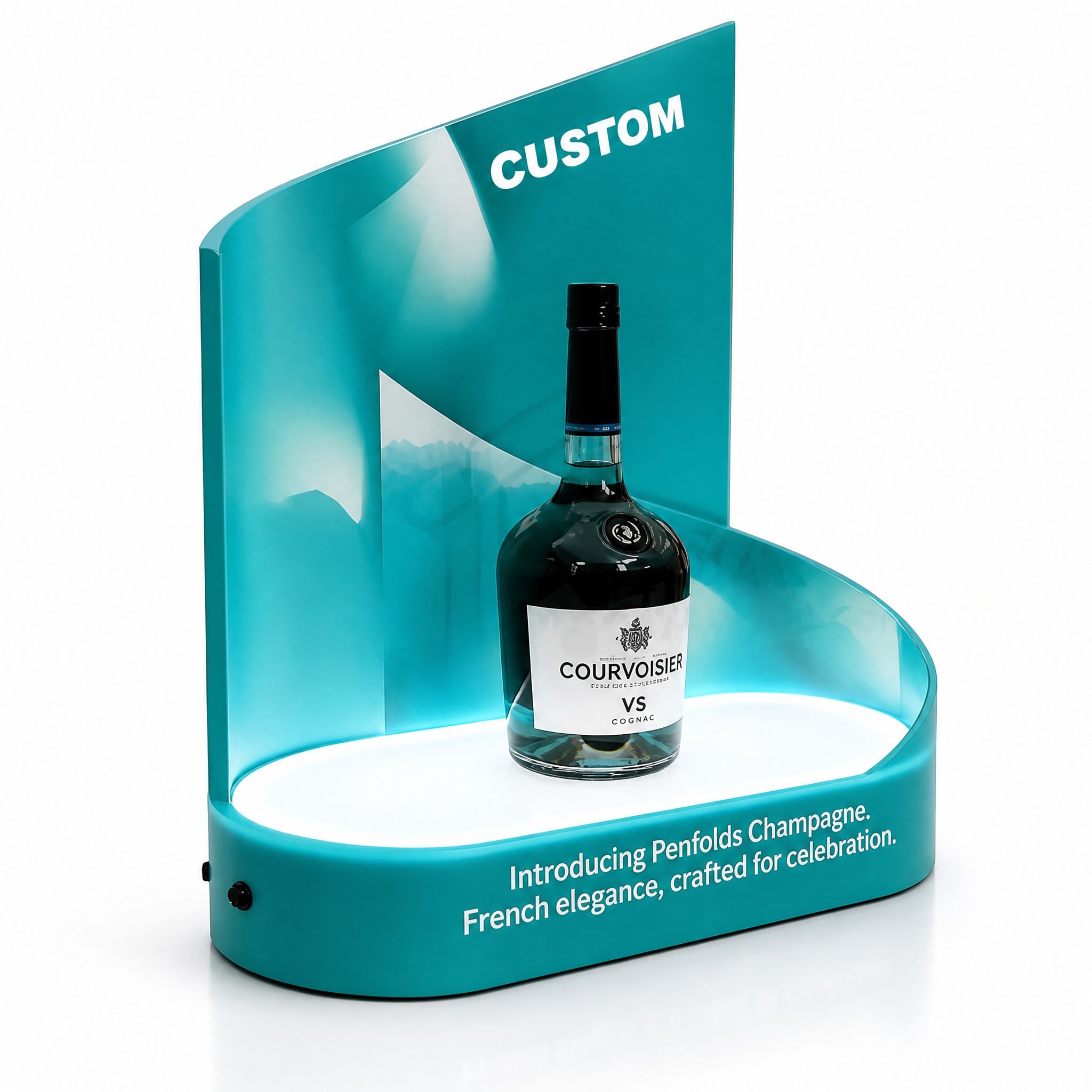
LED-illuminated single-bottle presenters (bottle glorifiers): Backlit acrylic or transparent platforms that highlight individual premium bottles. These are common in bars, hotel lobbies, and spirits retail environments where a single product needs to stand out at close range.
-
Multi-tier lighted liquor bottle shelves: Stepped acrylic or metal structures designed to display a full back-bar bottle lineup. LED edge-lighting or under-shelf lighting creates the characteristic glow seen in premium bar installations.
-
Counter and floor display stands: Freestanding units designed for retail countertops, POS locations, or bar counters. Available in acrylic, stainless steel, or wood to match the venue aesthetic.
-
Large LED display boards: Illuminated signage combined with product presentation — a large led display board in a back-bar setting can function as both a product showcase and a brand communication tool, effective for high-visibility bar and on-premise retail environments.
-
Custom commercial racks: Structural shelving or gondola-style racks designed for supermarkets, liquor stores, and off-premise retail. Custom commercial racks in this category are typically configured to meet retailer planogram requirements and support branded campaign materials.
Material options span acrylic, wood, stainless steel, and plastic — each suited to different durability expectations, venue aesthetics, and reorder cycles. A backlit acrylic unit that looks perfect in a product sample photograph may not hold up under the operational demands of a high-humidity bar environment, and that tension between visual appeal and functional durability is worth addressing early in the specification process rather than after samples are approved.
Common Application Scenarios
From a visual merchandising perspective, the way bar beverage display stands are deployed in a retail or hospitality environment directly affects shopper dwell time and purchase intent. The most common application scenarios include:
-
Back-bar installation in bars and restaurants: LED-illuminated displays are especially effective in atmospheric, low-light environments — where controlled backlighting creates a visual hierarchy that draws attention to featured products without relying on strong ambient overhead lighting.
-
POS floor and counter displays in liquor stores and supermarkets: Counter and floor units positioned near checkout zones or category entry points can support impulse purchase decisions. Display height (meaning the product eye-level alignment as shoppers approach) is a key variable in countertop and floor placement.
-
Promotional end-cap and campaign displays: Branded displays at gondola ends or floor islands are used for new product launches, seasonal campaigns, and category activation programs. Custom sizing and logo imprinting are standard requirements for these placements.
-
Branded tabletop displays for on-premise venues: Smaller-format countertop stands are common in restaurant table service environments, wine bars, and tasting rooms where the display is viewed at close range.
-
Retail planogram-compliant commercial racks: Standardized custom commercial racks for national retail chain programs require pre-approved dimensions, load specifications, and assembly documentation — and typically have longer production lead times and stricter quality tolerances.
How to Choose the Right Bar Beverage Display Stand
Selecting the right display stand involves more than matching a product image to your venue aesthetic. Working through a structured decision process at the start of your sourcing inquiry reduces specification errors and sample revision cycles.
-
Define your use environment: Indoor bar or restaurant, retail supermarket, or event POP — each context places different demands on material, footprint, and lighting type. What looks bright in a factory sample review can appear dim once installed in a high-ceiling retail space with strong overhead lighting, and this gap is frequently missed until the display is already mounted. If your venue relies on strong overhead fluorescent or LED downlights, specify display brightness with ambient light competition in mind.
-
Determine whether LED illumination is required: LED-lit displays carry higher per-unit costs and introduce electrical compliance considerations for your target market. If you are shipping to the European market (230V) or the North American market (120V), confirm that power supply specifications are pre-configured for your destination — purchasing a unit that requires on-site rewiring adds cost and delays deployment. If your display program spans multiple markets, confirm per-region configurations at the inquiry stage.
-
Set your customization requirements: Most bar beverage display projects require some degree of custom specification — logo imprinting, custom sizing, brand-specific color matching, or structural modification. If your requirement involves non-standard dimensions or brand-specific material finishes, communicate those constraints at the inquiry stage rather than after sample approval. A supplier with broad customization capability (supporting logo printing, custom sizing, material selection, and structural design modification) will give you fewer revision cycles and a more predictable sample-to-bulk timeline.
-
Review packaging and transit specifications: Buyers who source acrylic display stands internationally often find that edge chipping and surface scratching is a packaging failure rather than a product quality issue — but it still results in replacement costs and delayed campaign launches. Before committing to a bulk order, confirm the packaging method for your specific display format and freight route.
-
Request and inspect samples before bulk commitment: For LED display products, the sample inspection should include a powered-on visual check at display distance, not just a physical condition review. LED illumination quality — including illumination uniformity, absence of visible hot spots, and absence of dead LED zones — is only verifiable when the unit is running under conditions comparable to the intended installation environment. Request a powered inspection confirmation before shipment if your supplier is remote.
Why Bar Beverage Display Stands Matter for B2B Buyers
In the competitive food and beverage retail market, an eye-catching, well-positioned display is critical to attracting new shoppers and increasing impulse purchase rates — displays that blend into standard shelving are measurably less effective than those that create a distinct visual presence. The demand for displays with strong visual impact in low-light or atmospheric retail environments (premium bars, hotel lobbies, specialty wine shops) drives specific requirements for backlit and illuminated display formats that general-purpose shelving suppliers cannot readily meet.
For buyers procuring for European and North American markets, quality expectations include tighter print tolerances, more comprehensive electrical documentation, and packaging specifications that account for long-distance freight. LED display configurations pre-adapted for your destination market reduce the compliance preparation burden on the buyer side — and a manufacturer with established EU and North American supply experience can provide the relevant market-specific configuration and documentation as part of the standard product delivery.
If your project involves a branded display program with logo printing, color customization, or non-standard sizing, request a structural and visual sample before approving bulk production. The sampling process is iterative, and suppliers who provide clear revision guidance at the brief stage will save you time across the design, approval, and production phases. A well-specified bar beverage display stand — with the right material, correct LED configuration, and robust export packaging — is a measurable commercial asset for any beverage brand activation program.

 EN