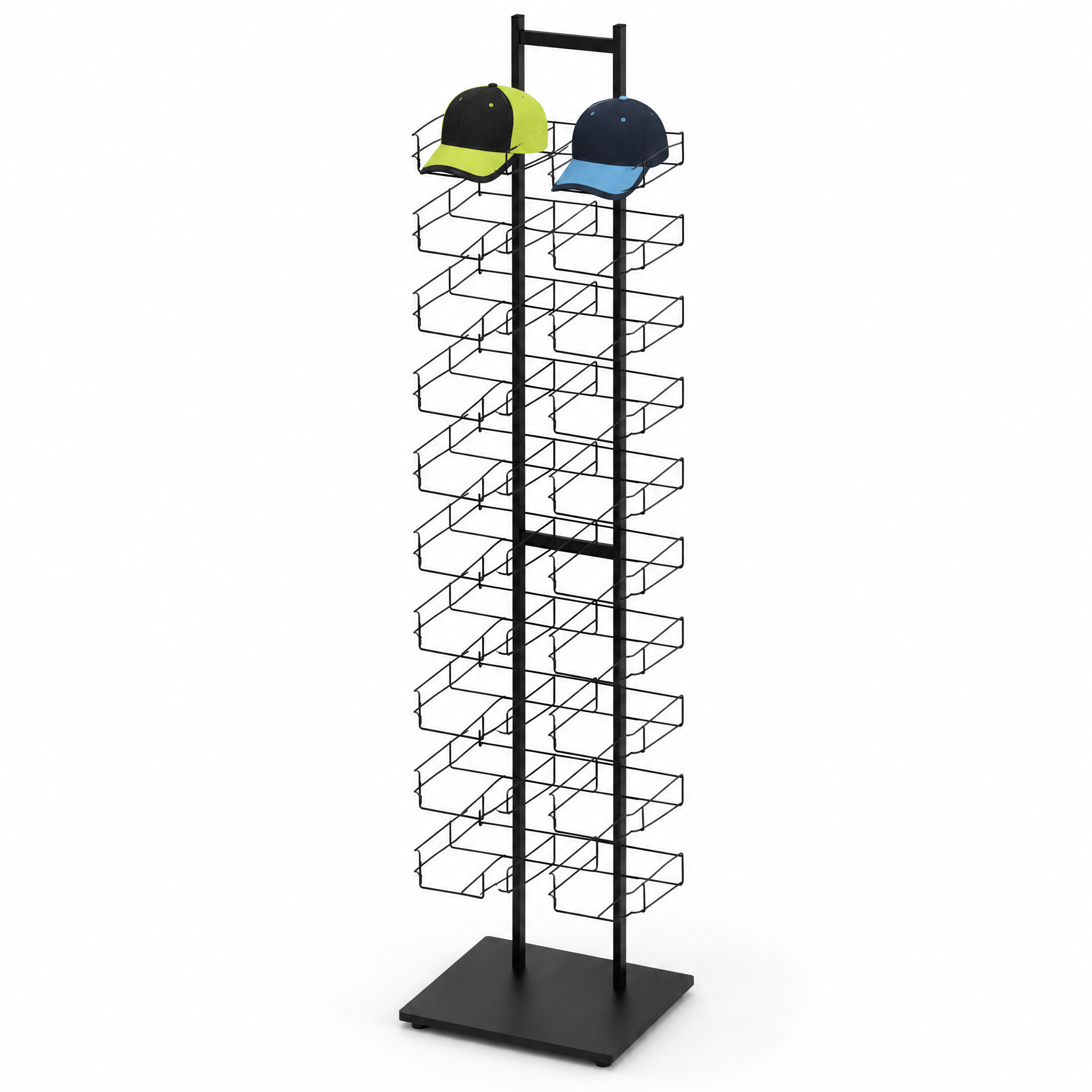
Metal Displays: Category Overview
Metal displays — also referred to as metal display stands or metal retail fixtures — form the structural backbone of permanent and semi-permanent retail presentation programs. Made from high-quality iron, stainless steel, or aluminum, these metal displays combine load-bearing capacity with a clean, modern aesthetic that serves both product containment and brand communication functions simultaneously. Unlike cardboard or acrylic alternatives, metal displays are built to be reused across multiple campaigns or sustained in fixed retail positions for years, which makes them a fundamentally different procurement decision from short-life campaign materials.
The metal displays category covers floor-standing display stands, counter-top display units, and wall-mounted fixtures. Each metal display configuration suits different retail environments, product weights, and store layout requirements. The central procurement question is rarely whether metal is the right material — for most commercial retail environments with heavier products or long-duration installation, it usually is — but which configuration, finish, and specification will serve the specific deployment context best.
Key Characteristics of Metal Displays
Metal displays in this category are produced from iron, stainless steel, and aluminum. Each material has a distinct performance profile that affects suitability for different environments:
-
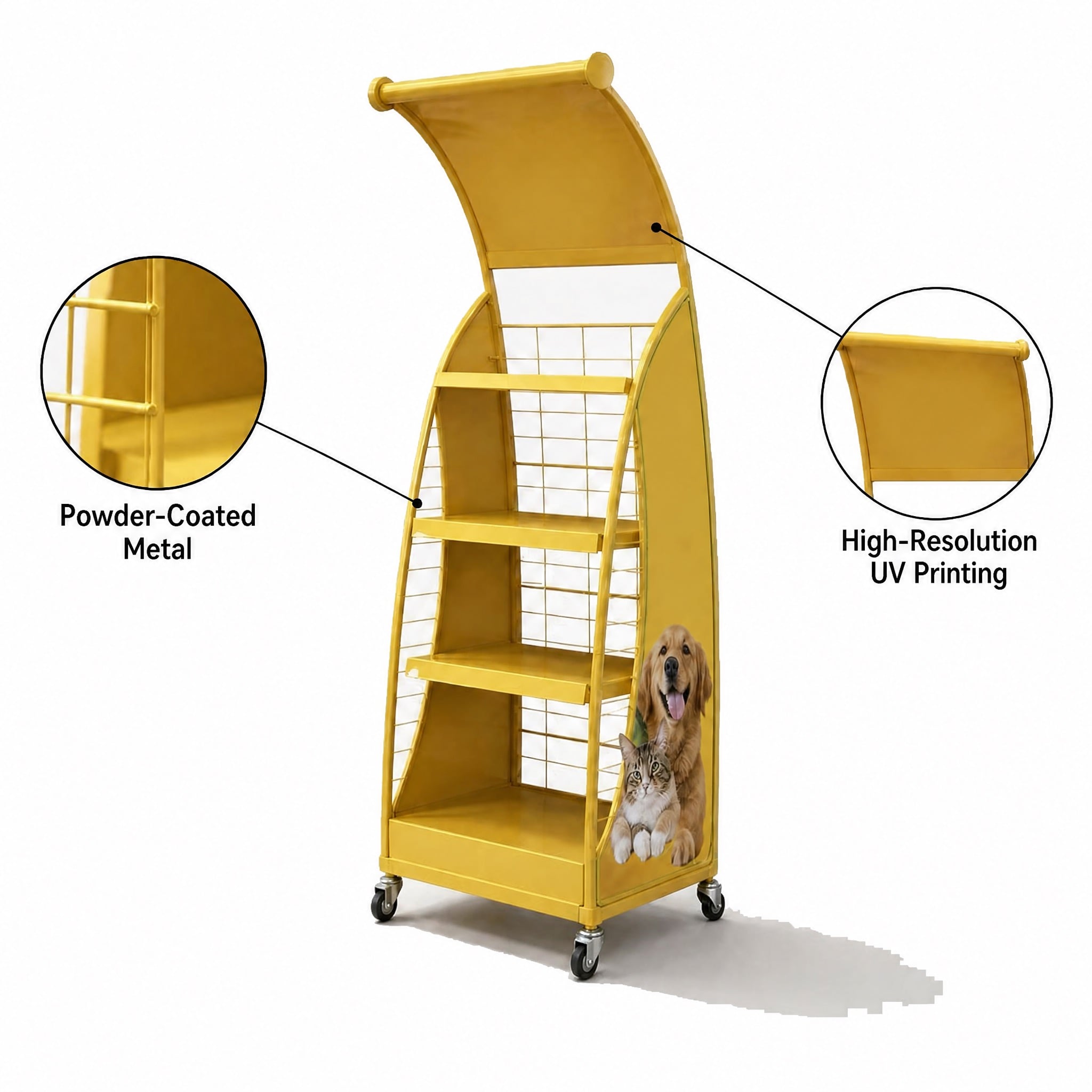
Iron: Delivers high load-bearing capacity and structural stability for metal displays carrying heavy products. Typically finished with powder coating to resist corrosion. The most practical option for heavy-product floor displays such as beverage racks, wine stands, or pet food fixtures.
-
Stainless steel: Rust-resistant by material nature, making stainless metal displays suitable for moisture-exposed environments including bars, beverage displays, and food service contexts. Higher material cost, but lower long-term maintenance requirement.
-
Aluminum: Lightweight and corrosion-resistant, preferred for metal displays that need to be repositioned or transported between retail locations. Lower weight does not compromise structural integrity for most standard product categories.
Surface finish options for metal displays include powder coating, chrome plating, and custom paint colors, allowing the display to align with a brand's specific color system. A metal display that looks polished in product renderings may not hold up the same way under repeated assembly cycles or high-humidity environments — and that tension between visual finish quality and functional durability is worth addressing early in the specification process, before sample production begins.
OEM and ODM services for metal displays cover logo printing, custom dimensions, material selection, and structural design modifications. This accommodates non-standard requirements common in branded retail programs where a catalog item rarely meets the full specification without adjustment.
Common Applications for Metal Displays
Metal displays serve a broad range of retail and commercial categories. The current product range demonstrates the application breadth of metal displays across multiple retail verticals:
-
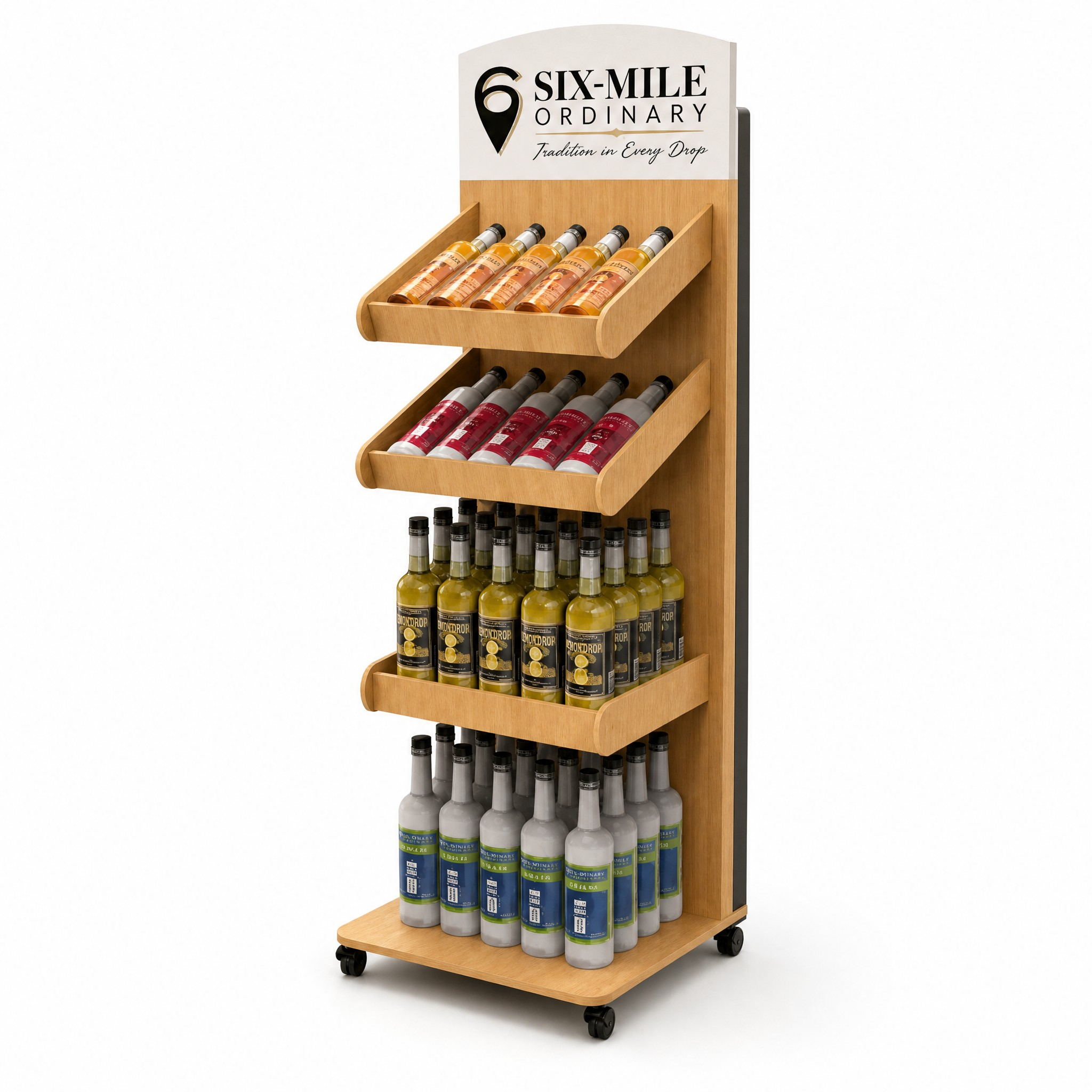
Beverage and wine retail: Multi-tier floor metal displays for organized bottle grouping by product section, used in supermarkets, convenience stores, drink specialty shops, and promotional campaigns.
-
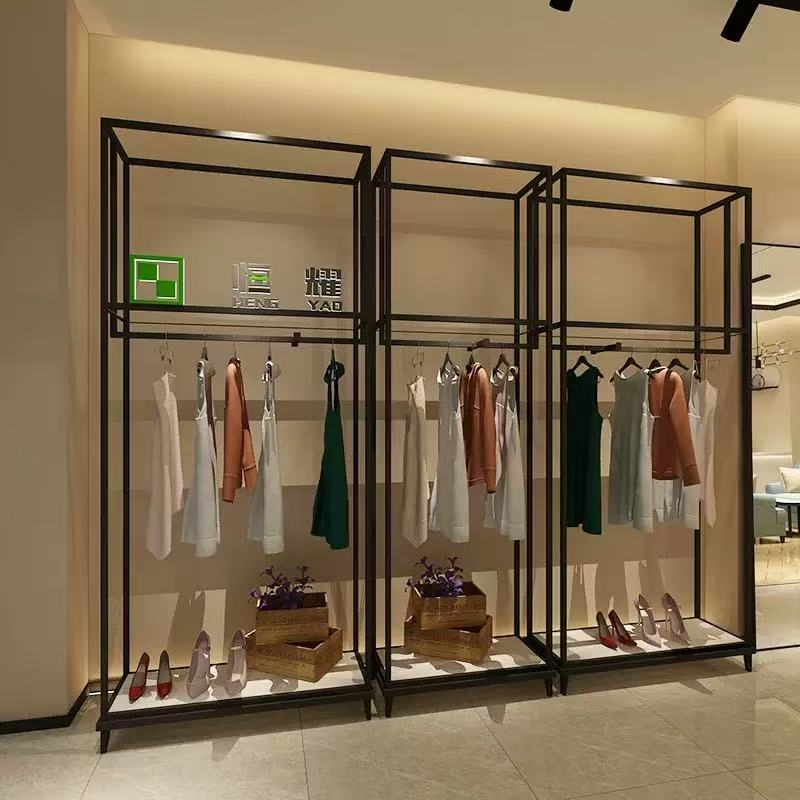
Clothing and footwear: Floor-standing and configurable metal displays for apparel and footwear retail environments, with custom size and logo printing options.
-
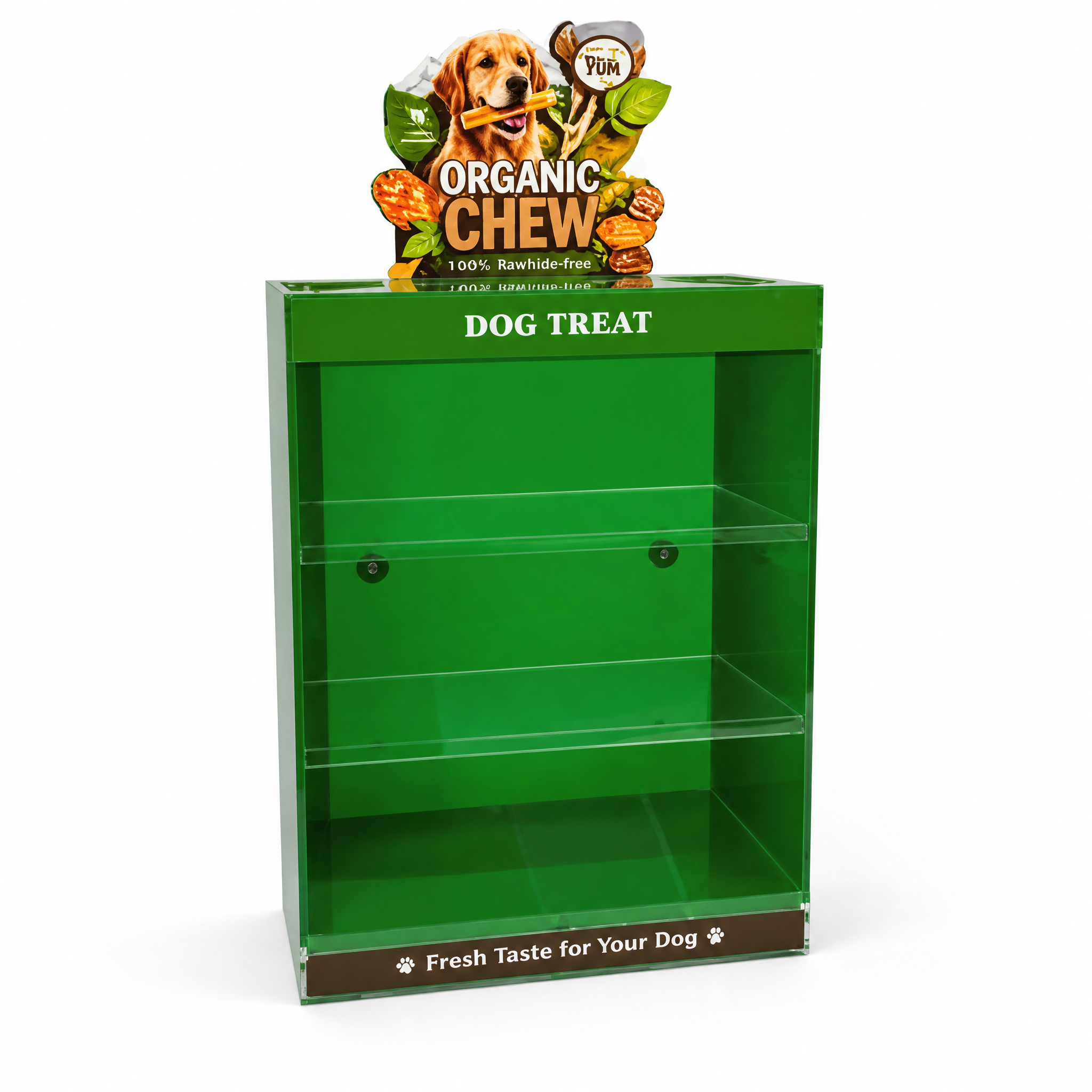
Pet product retail: Multi-layer display and storage metal displays for pet stores and pet supply programs, available in metal, acrylic, or cardboard depending on product weight requirements.
-
Tobacco and specialty retail: Counter-top and floor-standing metal displays with lock options, suitable for lawful adult-only product categories in dedicated specialty retail formats.
-
Bar and hospitality: Illuminated and non-illuminated metal displays for wine and spirits presentation in hospitality environments with specific aesthetic requirements.
-
Tools and hardware: LED-integrated or open-shelf metal displays for knife, tool, and hardware product categories.
The breadth of these application categories reflects a consistent characteristic of the display industry: metal displays must satisfy both structural product containment and brand communication requirements simultaneously. Buyers who treat metal displays purely as storage structures tend to under-specify the surface finish; buyers who treat them purely as brand props tend to under-specify the load capacity. Both failure modes are avoidable with a clear specification brief at the project outset.
How to Choose the Right Metal Display
As someone who has evaluated display options across multiple retail categories and deployment contexts, the selection process for metal displays follows a practical sequence that prevents the most common specification mismatches:
Step 1 — Define the deployment environment. The most important variable in selecting metal displays is not material grade or finish alone — it is how the display will actually be used. If the metal display will carry heavy products (full wine bottles, bagged pet food, tool sets), load-bearing rating should be the first specification confirmed. If metal displays will be deployed in a moisture-exposed or high-humidity environment (a bar, a refrigerated section, or an outdoor-adjacent installation), stainless steel or powder-coated iron is the appropriate material direction. If metal displays will be repositioned frequently between retail locations, aluminum's weight advantage becomes a practical operational consideration.
Step 2 — Determine the display lifecycle expectation. The display industry distinguishes between temporary-use products (designed for a single campaign run of weeks) and durable-use fixtures (designed for multi-year retail installation). Metal displays sit firmly in the durable-use tier. If your program involves annual reorders, franchise standardization, or consistent deployment of metal displays across multiple retail sites, metal's material consistency across production cycles is a meaningful operational advantage. The choice between metal displays and lighter-material alternatives ultimately comes down to how many times the display will be reused — and that calculation changes significantly depending on whether the program runs once seasonally or repeats across multiple campaign cycles.
Step 3 — Select the configuration type for your metal display. Floor-standing metal displays are suited for high-traffic retail environments where product visibility from multiple approach directions matters. Counter-top metal displays work for smaller product categories with limited floor space, such as tobacco accessories or specialty food items. Wall-mounted metal displays reduce floor footprint and are well suited to specialty retail formats with defined display walls — tobacco shops, clothing boutiques, and bar back-wall installations are typical examples.
Step 4 — Specify customization requirements before sampling metal displays. If the metal display needs to carry a brand logo, match a specific color (meaning a confirmed Pantone or RAL reference), or fit a non-standard retail shelving dimension, these requirements should be communicated at the quotation stage rather than after sample approval. Late-stage design changes — particularly dimensional changes that affect the structural frame of metal displays — add lead time and cost. For buyers managing programs with fixed campaign launch dates, early specification clarity is the most reliable way to protect the timeline.
Step 5 — Request a structural sample before bulk production commitment. For programs where metal displays will carry significant product weight or see repeated assembly and disassembly across retail locations, a pre-production sample allows load confirmation, finish review, and assembly difficulty assessment before bulk production begins. This step is particularly relevant when metal displays will be assembled by retail store staff (meaning without a dedicated installation team) or deployed to locations with limited support access.
Why Metal Displays Support Long-Term Retail Programs
For B2B buyers managing ongoing display programs across multiple retail locations, the practical advantages of metal displays over lighter-material alternatives become most visible across repeated use cycles:
-
High load-bearing capacity: Metal displays support product categories — bottled beverages, canned goods, packaged pet food — that would compromise cardboard or thin-plastic alternatives within weeks of active retail deployment.
-
Scratch-resistant, durable finish: Powder-coated or plated surfaces on metal displays maintain visual quality under the daily handling, restocking, and customer interaction cycles of an active retail environment.
-
Rust-proof material options: Stainless steel and treated iron in metal displays are suitable for food, beverage, and hospitality retail environments where surface moisture is a consistent operational factor.
-
Customizable size and design: OEM and ODM services for metal displays support logo printing, custom dimensions, and structural design modification — accommodating brand-specific requirements across the full range of product display programs.
-
Configuration flexibility: Floor-standing, counter-top, and wall-mounted metal displays cover the main store layout types, allowing a single supplier relationship to support multiple retail format requirements within the same brand program.
The right metal display specification comes down to matching the structural, environmental, and visual requirements of the specific retail context — not defaulting to the highest-specification option or the lowest unit price. Both approaches have real merit depending on the deployment condition, the program duration, and the budget constraint. If your priority is long-term durability across a multi-year retail fixture program, you'll want to focus on material grade and finish consistency in your metal displays rather than minimizing unit cost. If the program is a defined seasonal campaign with a clear end date, the specification may reasonably shift toward a lighter configuration that meets the timeline without over-investing in multi-year durability.

 EN