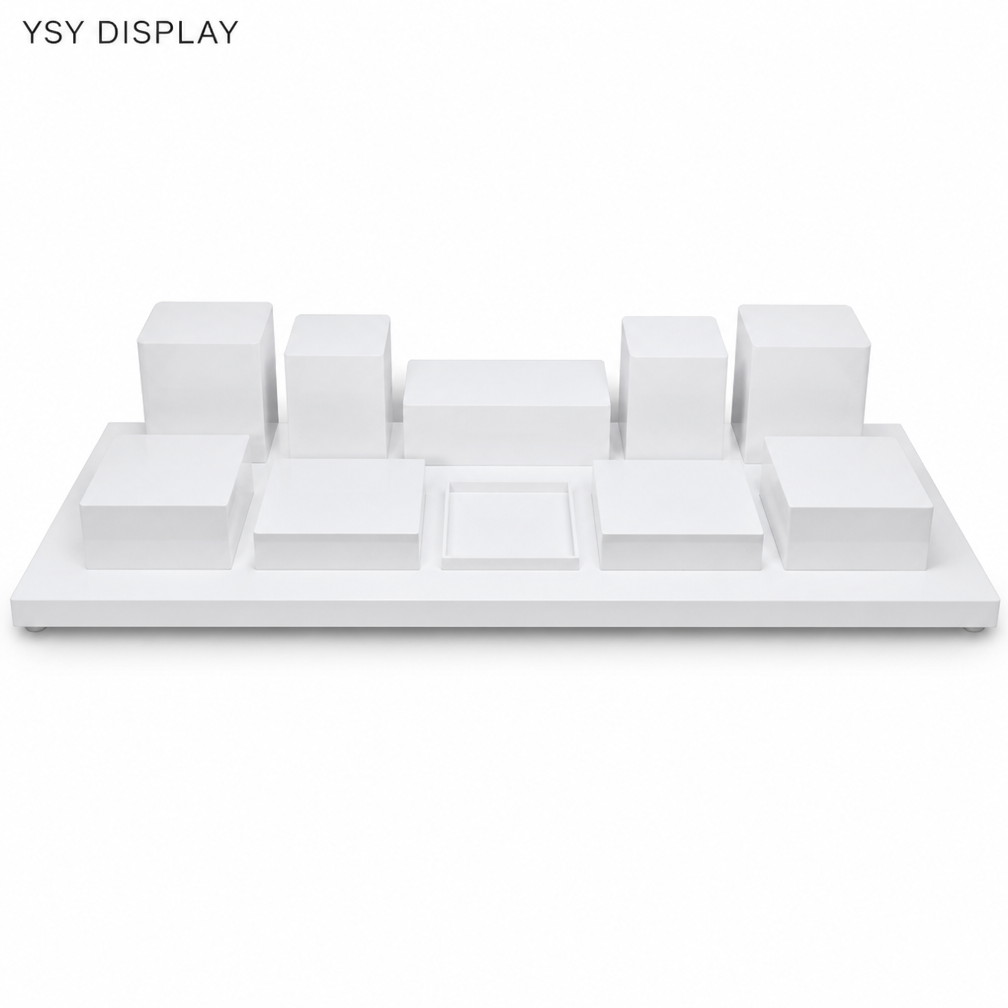
Overview of Home Decor Display Stands
Home decor display stands are freestanding, countertop, or wall-mounted structures purpose-built to present candles, ceramics, textiles, and decorative accessories in retail, trade show, and boutique environments. Unlike generic shelving, these stands are designed to elevate product visibility, establish visual hierarchy, and reinforce brand identity at the point of sale.
From a visual merchandising perspective, the way a display stand is deployed in a retail environment directly affects shopper dwell time and purchase intent. A well-positioned riser or tiered stand can transform a flat product arrangement into a compelling visual story — but the right format for home decor display stands depends on the venue, product weight, brand aesthetic, and whether the installation is temporary or permanent.
Display structures serve a dual function: structural product containment and brand communication — both requirements must be satisfied simultaneously. A stand that looks premium but cannot reliably support product weight is not fit for purpose; equally, a structurally sound stand that clashes with the brand visual language undermines the store's presentation goals. Buyers who understand this dual requirement are better positioned to evaluate suppliers and specify the right format.
Types of Home Decor Display Stands
This category spans several primary formats and materials, each suited to different use environments and brand requirements:
-
Acrylic stands: Transparent or tinted risers and panels that present products with minimal visual interference. The surface clarity (meaning how clean and distraction-free the acrylic appears under retail lighting) varies based on material grade, edge finishing, and handling specifications. Polished edges and UV-stable material grades reduce the risk of yellowing or scratching in long-term retail installations.
-
Metal stands: Powder-coated or brushed steel and aluminum frames that offer structural durability for heavier items. Common in retail environments requiring long-term installation or high-traffic floor placement. Weight capacity and joint construction are the key specification criteria for this format.
-
Wood and MDF options: Warm-toned structures suited to natural, artisanal, or rustic home decor brands. Available in a range of stain finishes and edge treatments. MDF cores with veneer or paint finish can closely replicate the appearance of solid wood at lower cost and weight.
-
Multi-tier and modular systems: Adjustable shelf and riser configurations that allow buyers to match display height and product spacing to different SKU dimensions. Modular formats are particularly useful for brands managing seasonal collection rotations.
-
Countertop risers and pedestals: Compact elevated platforms for featured product groupings, small decorative items, and cosmetic accessories. Available in single-level and tiered formats across acrylic, metal, and wood materials.
Customization is the norm rather than the exception in this product category — most buyers require branded, sized, or structurally modified products rather than pure catalog items. Logo printing, custom color matching, non-standard dimensions, and specific material combinations are standard requests, and suppliers with in-house fabrication capability are better positioned to accommodate these requirements without significant lead time impact.
Common Applications for Home Decor Display Stands
These display structures serve a wide range of retail and event environments, each with distinct setup and durability requirements:
-
Boutique retail stores: Countertop risers and tiered stands work well for seasonal collections, featured product groupings, and new arrival highlights.
-
Trade show booths and brand activations: Portable, lightweight structures that assemble quickly and present products at consistent eye level across multiple event formats. Home decor display stands used for trade shows benefit from flat-pack design and reusable packaging to reduce per-event transport costs.
-
Department store shop-in-shop installations: Floor-standing systems with branded panels and integrated product compartments, often requiring compliance with retailer-specific footprint and fixture specifications.
-
Home decor showrooms and galleries: Modular configurations that allow buyers and interior designers to view a full product range in a curated spatial context.
-
Photography and e-commerce staging: Acrylic formats are frequently used as photography props, providing a clean, distraction-free backdrop that keeps the product — not the stand — as the visual focus.
-
Pop-up shops and seasonal events: Collapsible or flat-pack options designed for quick setup and easy transport between locations without requiring dedicated freight handling.
In practice, the effectiveness of a display stand in a retail setting depends heavily on its position relative to the natural shopper path — a detail that is easy to miss when viewing the stand in isolation. A stand placed perpendicular to the main aisle typically captures more passing traffic than one positioned parallel to the shelf wall. Buyers specifying floor-stand dimensions should account for this placement factor in addition to product visibility height.
How to Select the Right Home Decor Display Stands
Selecting appropriate home decor display stands involves more than matching a style preference. A structured approach reduces the risk of ordering a product that looks right in a catalog photo but creates problems in the field.
-
Define the use environment first. Is the display intended for a permanent retail installation, a seasonal campaign, or a portable trade show setup? If your trade show appearances are frequent and the structure sees significant handling, then the investment in a rigid acrylic or metal format usually pays off over multiple events. If it is a single campaign, a well-engineered MDF or PVC option is worth considering instead.
-
Set weight capacity and dimensional requirements. Match the stand weight capacity and assembled footprint to your actual products before requesting samples. One frequently overlooked detail in home decor display stands specification is that the intended eye-level height may vary by regional market — which can affect how visible the brand message actually is when deployed in European versus North American retail environments, where average shopper heights and aisle widths differ.
-
Select the material based on use case, not appearance alone. Acrylic is suitable for products that benefit from optical transparency and a premium surface finish; metal is better suited to heavy or high-traffic environments where structural rigidity matters; wood and MDF work well for natural or artisanal brand aesthetics. If your priority is durability and reuse across multiple campaigns, focus on material grade and joint construction rather than defaulting to the most popular option. Both acrylic and metal home decor display stands have real merit — the right choice depends on your venue type, campaign duration, and brand requirements.
-
Confirm customization scope before sampling. Brands typically require stands to carry logos, match brand color standards, and fit specific product dimensions. Establishing customization requirements before requesting a physical sample prevents design revisions after prototype approval and reduces production delays.
-
Plan packaging and shipping for fragile components. Buyers who source home decor display stands internationally often discover that edge chipping and surface scratching on arrival is a packaging problem rather than a product quality issue — but the replacement cost and campaign delay are the same regardless. Confirm that export packaging includes corner protection, foam interleaving, and adequate carton strength for the shipping route expected during transit.
Sourcing Home Decor Display Stands for International Brand Buyers
For European and North American brand buyers, several factors beyond unit price affect total program value when sourcing home decor display stands. Suppliers with experience serving these markets understand the quality documentation standards, lead time expectations, and import compliance requirements that differ from domestic sourcing contexts.
Customization capability across display formats — including logo printing, custom sizing, material and finish selection, and structural design modification — is a meaningful differentiator when evaluating suppliers. Buyers with non-standard dimension requirements or brand-specific finish standards benefit most from suppliers with in-house cutting, bending, and finishing capabilities rather than those relying on subcontracted production for modified specifications.
Assembly documentation for these stands is sometimes missing, unclear, or written for someone already familiar with the product format — causing setup errors at trade shows or retail installations where on-site support is not available. Requesting complete assembly instructions as part of the sample review process, before bulk production begins, reduces this risk significantly. For retail programs with nationwide deployment or self-service setup by retail staff, clear and tested documentation is as important as the physical product specification.
Evaluating home decor display stands against total program cost — including packaging, freight, and setup requirements — gives a more accurate picture of supplier value than unit price alone. Buyers managing multi-market programs benefit from suppliers who can maintain consistent quality and specification across production runs, reducing the risk of display variation between reorders.

 EN