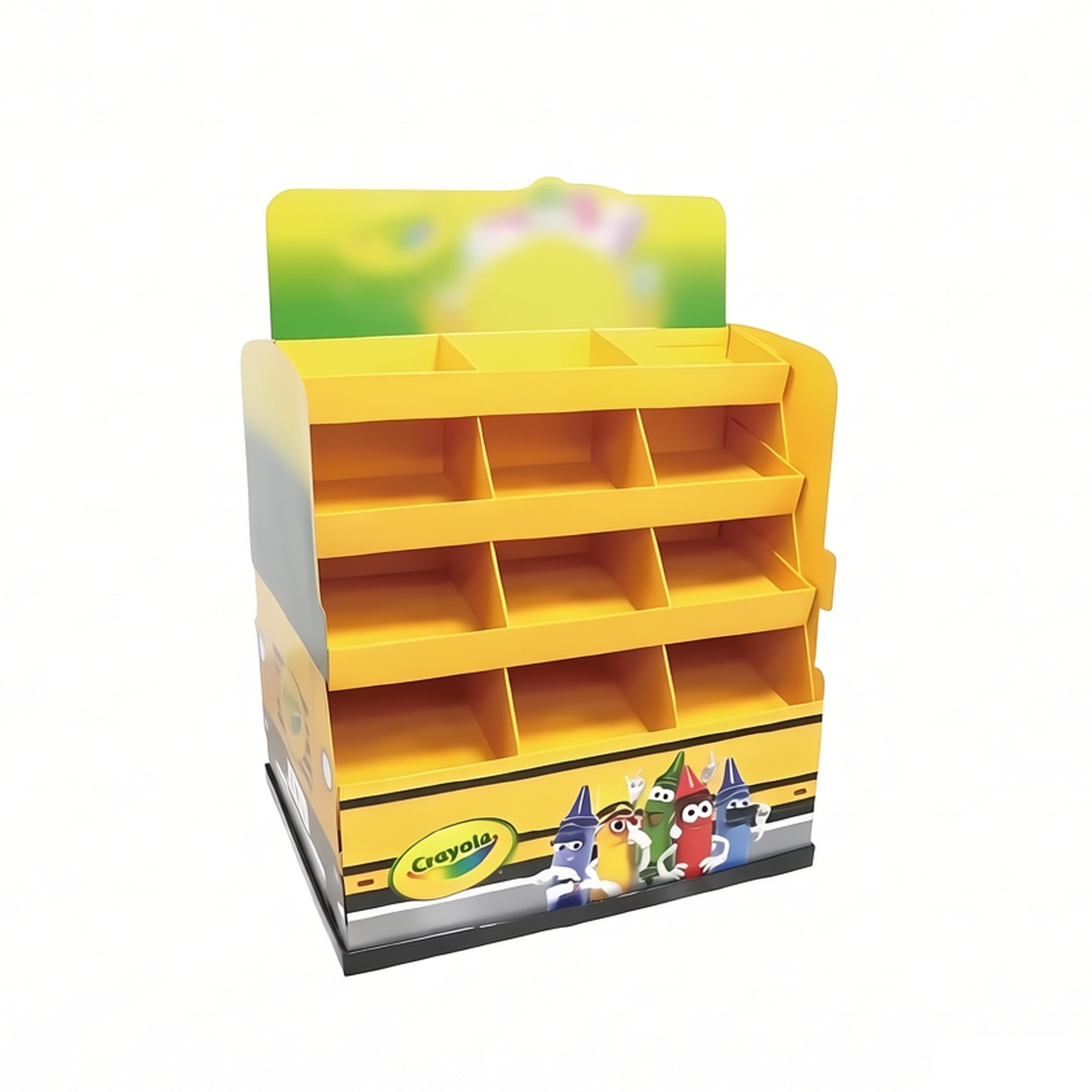
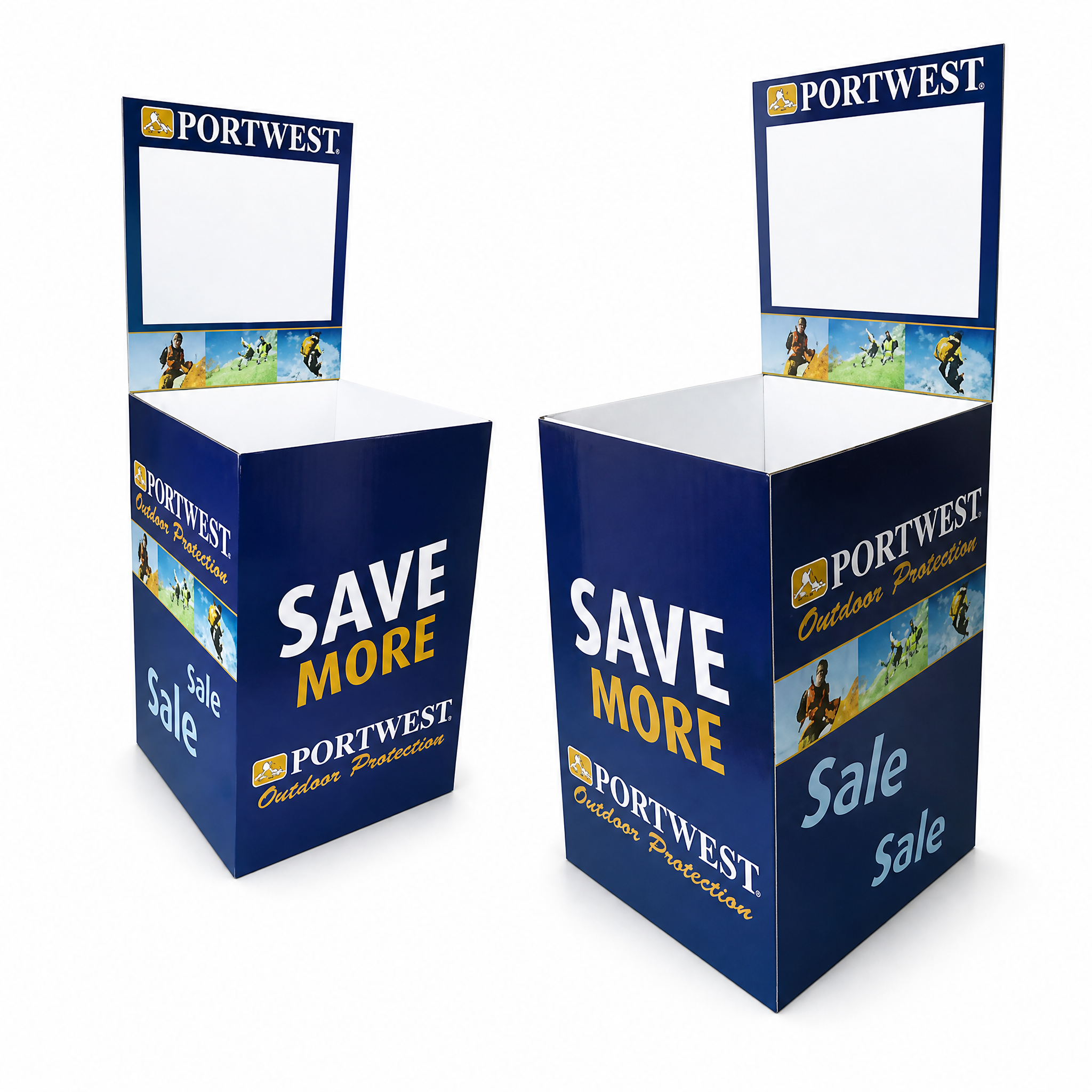
Understanding Supermarket Dump Bins as a Retail Display Format
Supermarket dump bins are open-top floor display units designed to create a value zone — that signal of abundance and promotional urgency — that prompts shoppers to stop, browse, and pick up products on impulse. From a visual merchandising perspective, the way a dump bin is deployed in a retail environment directly affects shopper dwell time and purchase intent. Unlike structured formats such as retail jewelry display cases, which rely on precision and containment, supermarket dump bins work through massed product presentation: the visual effect of a full, overflowing bin communicates availability and drives impulse behavior far more effectively than an organized shelf.
In practice, the effectiveness of supermarket dump bins in a retail setting depends heavily on their position relative to the natural shopper path — a detail that is easy to miss when reviewing the display in isolation. A dump bin placed at an aisle end cap or near a high-traffic checkout zone intercepts natural footfall. One positioned against a back wall or in a low-traffic section rarely converts at the same rate, regardless of structural quality or print impact.
Key Product Characteristics
Corrugated cardboard is the standard material for supermarket dump bins, and for good reason. The structural properties of single-wall and double-wall corrugated board make it capable of holding substantial product loads while remaining lightweight enough to reposition on the retail floor without specialized equipment. What is harder to predict before deployment is how a cardboard floor display holds up when stacked with heavy product SKUs — particularly after two to three weeks in a warm or humid retail environment. Corrugation grade selection (meaning the choice between single-wall, double-wall, or heavier-duty board specifications) is the primary lever for managing that structural risk.
-
Wide-format print capability: The XH-PB-004 corrugated dump bin supports a maximum print width of 2.05 meters — a wider printable surface than typical standard corrugated display bin formats, enabling full-wrap brand graphics from a single production run.
-
FDA-compliant materials: The XH-PB-004 is produced using FDA-compliant corrugated cardboard, meeting applicable standards for indirect food-contact proximity in retail display applications — a specification relevant for grocery and FMCG floor display environments.
-
Custom dimensions and graphic options: Dump bin display stands in this category support custom dimensions, logo printing, color selection, and graphic design based on approved product, artwork, and retail location requirements.
-
Configuration flexibility: Standard corrugated dump bins are available in square configurations; custom structural briefs can support hexagonal, octagonal, or other footprint formats depending on the retail floor program.
-
Internal dividers: Optional multi-SKU dividers allow a single dump bin to present multiple product variants without mixing — useful for seasonal promotions where product variety is part of the campaign message.
Common Applications for Supermarket Dump Bins
Supermarket dump bins are the go-to format for seasonal promotions, clearance events, new product launches, and impulse-driven categories including candy, snacks, toys, beauty travel minis, pet treats, and gift sets. For buyers managing grocery retailer POS programs or planning supermarket campaign rollouts, dump bins address a specific brief: high-volume product presentation at low per-unit display cost, with fast turnaround and straightforward retailer compliance.
Buyers in comparable situations — managing seasonal display programs for FMCG brands entering European or North American grocery retail chains — have found that pairing dump bins with digital advertising display screens at key in-store junctions can strengthen campaign recall. The physical dump bin handles product-level impulse; the digital screen handles brand-level awareness. If your campaign brief includes both formats, building that pairing into the initial procurement plan rather than sourcing the two separately reduces coordination complexity.
Point-of-purchase launches, clearance cycles, and seasonal restocks all generate demand for supermarket dump bins on a recurring basis. Display requirements are heavily campaign-driven, creating predictable but compressed procurement windows tied to seasonal retail calendars — meaning Q4 holiday, back-to-school, and regional promotional events create reliable but time-sensitive sourcing cycles for buyers managing annual display programs.
How to Choose the Right Supermarket Dump Bin
If your deployment involves lightweight products — confectionery, small packaged goods, single-serve items — and a short promotional window of two to four weeks, a standard single-wall corrugated dump bin is usually sufficient. If the display will carry heavier products such as bottled beverages, canned goods, or large packaged snacks, or will remain on the retail floor for a full seasonal campaign, then double-wall or reinforced board construction is the appropriate specification.
Display materials serve a dual function: structural product containment and brand communication — both requirements must be satisfied simultaneously. A display that holds product weight but produces weak color reproduction will underperform on brand impact. A display with strong graphics but inadequate structural durability will fail before the campaign ends, particularly in high-humidity environments or high-traffic product-handling zones where cardboard surfaces face repeated shopper contact.
Working through these questions before requesting a quote will narrow the specification quickly and reduce revision cycles: What is the approximate product weight per bin? What is the expected floor duration? Does your retail partner require specific compliance documentation, FSC-certified materials, or pre-approval before deployment? Addressing these upfront avoids last-minute structural or compliance revisions after sample approval.
Procurement Lead Time and Campaign Planning
It is easy to underestimate lead time for custom supermarket dump bins when a supplier quotes a standard production window — the production time alone often does not account for graphic artwork approval rounds, structural sample review, and freight consolidation for international delivery. For buyers shipping to European or North American markets, building a six to eight week buffer between artwork sign-off and required in-store date is a conservative but realistic baseline for planning purposes.
Because display requirements are campaign-driven, the consequences of a dump bin arriving after the promotional window opens can be significant. If your launch date is fixed, communicating it at the inquiry stage rather than after sample approval allows the supplier to flag production capacity or lead time constraints before commitments are made on either side.
Structural Durability and Assembly in Retail Rollouts
In settings similar to nationwide grocery rollouts — where displays are assembled by retail staff without on-site supervision — the assembly process itself becomes a quality variable. Supermarket dump bins that ship flat-packed for efficient freight and require tool-free pop-up assembly are standard in this category. Clear assembly reference markings on the unit, indicating panel orientation and locking point sequence, reduce assembly errors and ensure the structural integrity of the finished display matches its designed load capacity regardless of staff experience.
Surface finish durability is another practical consideration for high-traffic retail environments. Coating and lamination choices directly affect how well a dump bin surface holds up under repeated shopper handling. A surface that peels or loses finish quality within weeks of deployment undermines the brand impact the display was designed to deliver — and mid-campaign replacement is rarely logistically feasible in a national retail program.
Customization and Design Support
Supermarket dump bins in this category support full customization across dimensions, structural configuration, print graphics, color selection, and finishing options. Free design support is included, making this display format accessible to brand buyers and agencies developing a new display brief without in-house corrugated display engineering experience. Whether your requirement is a standard square floor bin with full-wrap brand graphics or a multi-SKU divider configuration for a seasonal variety launch, the brief can be developed from initial dimension and product specification through to print-ready dieline.
The combination of wide-format print capability, FDA-compliant corrugated materials, and flexible structural configuration makes supermarket dump bins a practical entry-point format for brands beginning grocery retail display programs, as well as a reorder-stable format for buyers managing ongoing seasonal campaigns across multiple retail locations.

 EN