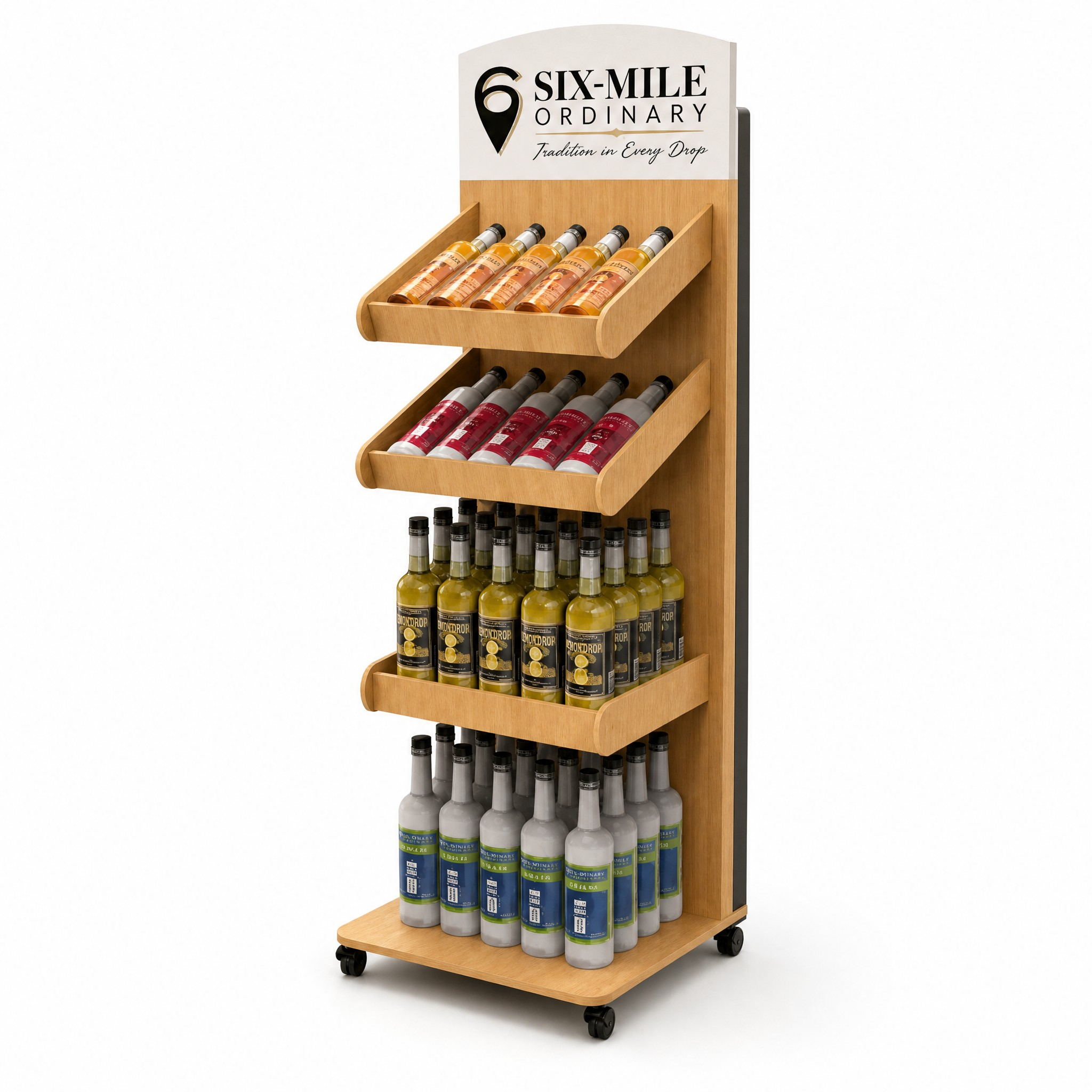
What Are Beverage Metal Floor Stands?
Beverage metal floor stands are freestanding display units built from steel tubing, wire frames, or sheet metal construction, designed to hold and showcase bottles, cans, and packaged drinks at retail floor level. Unlike countertop holders or wall-mounted fixtures, beverage metal floor stands operate as independent product presentation systems — they carry both the structural load of stacked beverages and the visual responsibility of communicating a brand's presence in a crowded retail aisle.
For procurement buyers sourcing display solutions for supermarkets, convenience stores, specialty drink shops, or branded retail activations, understanding what to evaluate in a beverage metal floor stand makes the difference between a display that performs reliably through the full campaign cycle and one that creates structural or compliance problems mid-deployment. Most buyers require at least some degree of customization — branded color, logo placement, or dimension adjustment — because standard catalog floor stands rarely fit a specific product format or retail environment out of the box.
Display products in this category serve a dual function that is easy to underestimate: they are both structural load-bearing units and brand communication surfaces. When structural performance fails — shelves buckling under bottle weight, casters locking unevenly, or frames developing surface corrosion — the brand presentation suffers alongside it. Sourcing a floor stand that satisfies both requirements simultaneously is the core challenge for most buyers in this category.
Key Product Characteristics
The construction of beverage metal floor stands typically centers on steel tubes or wire frames with a surface treatment — powder coating, zinc plating, or chrome plating — applied for corrosion resistance and brand color alignment. For the beverage retail environment specifically — where condensation, spilled liquid, and refrigeration-adjacent humidity are common — the finish choice has a direct impact on display lifespan. Powder coating generally offers better long-term performance in humid sections, while chrome plating suits premium aesthetic requirements in dryer indoor settings.
-
Multi-tier shelving: Adjustable or fixed shelf heights allow floor stands to accommodate different bottle heights, can formats, or mixed product arrangements. Tier count typically ranges from two to six levels depending on the retail space allocation and product weight requirements.
-
Structural frame options: Tube steel frames offer higher load capacity for wine, spirits, and large-format beverages. Wire mesh configurations are lighter and allow air circulation, suited for canned or lighter packaged drinks.
-
Surface treatment and finish: Powder coating supports brand color matching via standard RAL or Pantone reference. Chrome and zinc plating provide a clean metallic appearance suited for premium or minimalist brand identities.
-
Casters and leveling feet: Optional casters allow repositioning between campaign phases or retail zones. Leveling feet improve stability on uneven retail floor surfaces, a practical consideration often overlooked until deployment.
-
Removable dividers and header cards: Adjustable shelf dividers support product zoning within a single stand. Header card frames allow campaign messaging and promotional graphics to be mounted and swapped between seasonal activations.
-
Custom branding: Logo decal application, printed side panels, and color-matched paint finishes are standard customization options available for branded display programs targeting European, North American, and Middle Eastern retail markets.
Common Applications
Beverage metal floor stands are deployed across a range of retail and event contexts. The specific configuration — tier count, frame strength, finish, and footprint — varies significantly between these use cases, which is why defining the deployment environment is the first step in any sourcing process.
-
Supermarkets and grocery retailers: Multi-tier floor stands used for promotional product launches, seasonal campaign end-caps, or permanent beverage section fixtures. In practice, the effectiveness of a floor-standing display in a supermarket depends heavily on its position relative to the natural shopper path in the aisle — placement decisions that are difficult to anticipate when reviewing specifications at the sourcing stage.
-
Convenience stores: Compact floor stands positioned near checkout or entrance zones where floor space is tightly constrained. For these environments, aisle clearance compliance and planogram pre-approval from the retailer are typical requirements before display units can be ordered at scale.
-
Specialty beverage shops: Branded floor stands for wine, craft beer, or premium drink labels where the visual quality of the display reflects directly on product positioning. Custom size, color, and logo options are typically required to align with the brand's existing store environment.
-
Exhibition booths and promotional events: Freestanding floor stands used for temporary brand activations where easy setup, repositioning capability, and compact packaging for transport are priority considerations. Stands designed for event use are often paired with complementary display formats — including double sided retractable banner stands or tension fabric banner stands — to complete a branded booth environment.
-
Drink shop franchise programs: Multi-location display programs where consistent specifications across all franchise outlets are required. For franchise operators, reorder consistency — matching original dimensions, finish, and structural grade exactly — is as important as the quality of the initial production run.
How to Choose the Right Beverage Metal Floor Stand
As a procurement specialist who has sourced display materials across multiple trade show and retail environments, the following steps hold up consistently across different buyer contexts — regardless of whether you are placing a first-time order or managing a multi-location reorder program.
Step 1: Define your load and structural requirements. Start with your heaviest product format and calculate the total loaded weight per shelf tier. For wine or large-bottle formats, this can reach 15–25 kg per tier depending on arrangement. Match this against the supplier's specified shelf load rating — and if it is not explicitly listed in the product specification, request it before approving a sample.
Step 2: Set your floor space envelope before ordering. Beverage retail environments have strict planogram requirements for aisle clearance, particularly in European and North American retail chains. Know your maximum assembled footprint — including casters or leveling foot extensions — before finalizing dimensions with the supplier. Displays that arrive outside the retailer's approved footprint have no commercial value regardless of their structural quality.
Step 3: Confirm surface treatment for your deployment environment. For high-humidity sections — near refrigeration units, outdoor covered event areas, or tropical market retail environments — powder-coated steel generally outperforms chrome plating in long-duration deployments. If the display is intended for dry indoor retail only, the finish decision is primarily aesthetic and can be driven by brand alignment rather than performance.
Step 4: Clarify all customization requirements before production begins. Logo application, brand color matching, and custom shelf dimensions all affect both the production timeline and the sample approval process. It is easy to underestimate lead time for custom beverage metal floor stands when a supplier quotes a standard production window — the timeline often does not account for structural sample shipping, approval rounds for printed panels, and freight consolidation with other order components.
Step 5: Request a loaded structural sample before bulk production. One frequently overlooked detail in floor stand specification is that assembled stability and effective display height may differ from the supplier's rendered image — particularly once the unit is loaded with actual product weight. Buyers in comparable sourcing situations have consistently found that a loaded sample review prevents costly adjustments at the bulk production or delivery stage.
Sourcing Beverage Metal Floor Stands for Export Markets
For brand buyers and procurement teams sourcing beverage metal floor stands for European, North American, or Middle Eastern retail deployments, working with a manufacturer experienced in export-format production and international program management reduces coordination friction. Key considerations include export packaging specifications to prevent structural damage in transit, finish durability under the destination market's retail conditions, and documentation requirements for import compliance at the receiving end.
Guangzhou Yishengyuan Display Supplies Co., Ltd manufactures and exports custom beverage metal floor stands with configurable size, color, logo, and material options for B2B buyers operating in global retail markets. The product portfolio covers multi-tier bottle and can display configurations for supermarket promotional programs, specialty retail environments, and branded event activations. Custom display programs — from specification through bulk export — can be discussed directly through the manufacturer's website at ysy-display.com.
For buyers managing integrated display programs across multiple formats — where a beverage metal floor stand is part of a broader retail environment that also includes custom counter display boxes, led display signs for businesses, or fabric-based signage systems — sourcing through a single manufacturer with cross-format capability reduces supplier management overhead and improves program consistency.

 EN