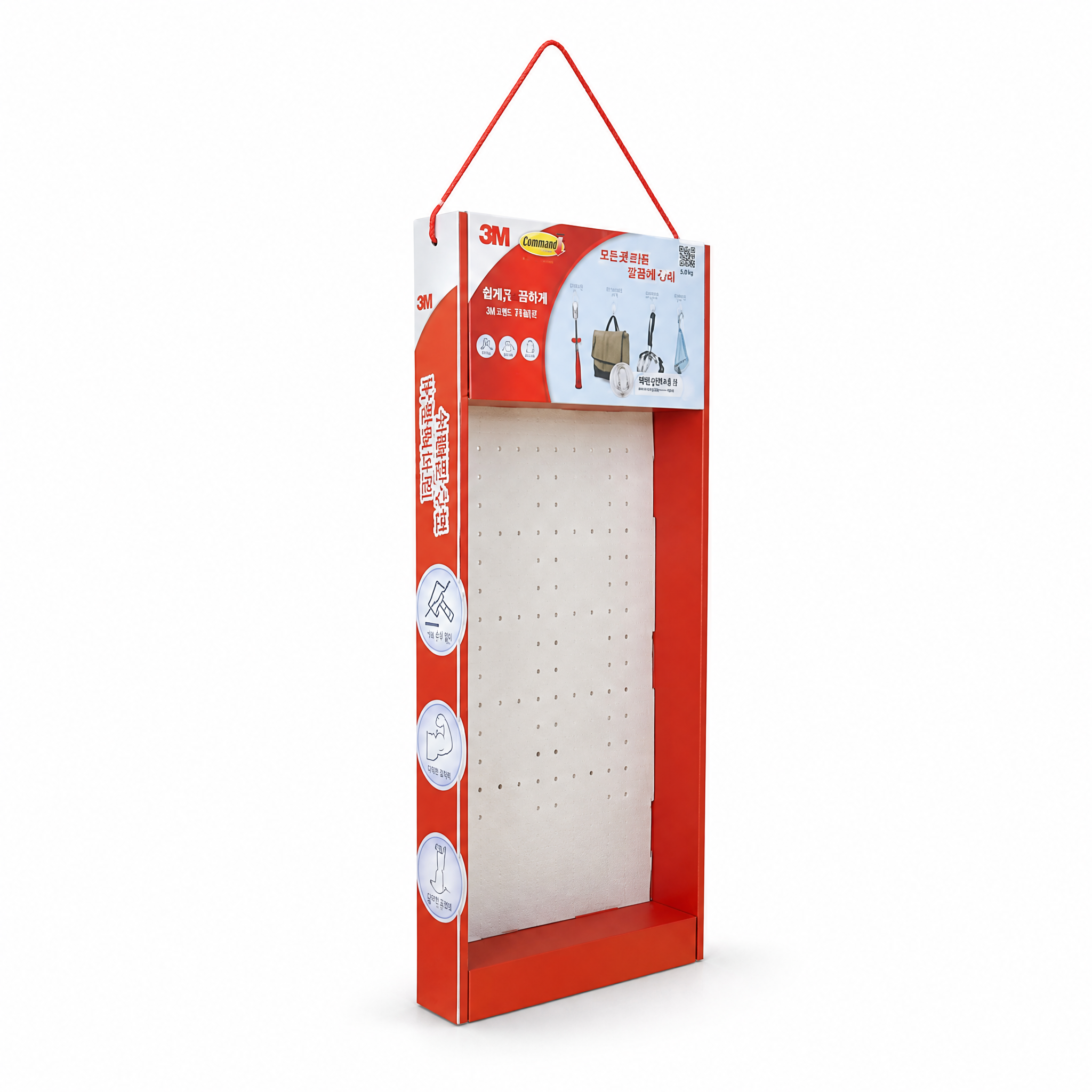
What Are Fin-Style Cardboard Stands?
Fin-style cardboard stands are freestanding floor display units defined by their large vertical side panels — the fins (meaning the extended blade-like side wings) — which double as high-visibility branding surfaces while keeping products organized and accessible at shelf level or aisle-end positions. Unlike standard counter displays or vertical banner stands, fin-style designs use the structural side panels to carry brand messaging, making them particularly effective in high-traffic retail environments where lateral visibility matters as much as front-facing presentation.
As a procurement specialist sourcing display materials for retail and promotional programs, the first thing worth understanding about this format is that the fin panel is the functional centerpiece. Everything else — structural load capacity, flat-pack shipping efficiency, and assembly logic — needs to be designed around how that fin performs under real retail conditions.
Key Product Characteristics
-
Structural fin panels: The defining feature of this category — large-format side or rear panels that carry brand graphics and maintain structural stability for the unit. Fin panel rigidity is determined by board grade and internal bracing design, not fin size alone.
-
Freestanding floor placement: Designed for floor-level retail deployment at gondola ends, promotional zones, or open aisle positions — without requiring shelving integration or wall mounting.
-
Custom print surface: The fin panels and front face serve as full-bleed print areas for brand identity, product information, and campaign messaging. Custom printing is standard in this category, not an optional upgrade.
-
Flat-pack shipping format: Most fin-style units are engineered for flat-pack delivery, reducing freight costs and enabling efficient storage before deployment. What's harder to predict before deployment is how a fin-style cardboard stand holds up when assembled repeatedly across multiple store locations — particularly after two to three weeks in a warm retail environment. Corrugation grade selection is the variable that matters most here.
-
Tool-free assembly: Quality units can be set up by retail staff without tools, following tab-and-slot or interlocking construction. This matters significantly for multi-location rollouts where training resources are limited.
-
Custom sizing: Fin-style stands can be specified across a range of heights and widths to fit target retail floor zones, planogram requirements, and product load configurations.
Common Applications
Fin-style cardboard stands are most frequently deployed in environments where floor space is contested and brand visibility competes with surrounding fixtures. Typical use cases include:
-
Supermarket and grocery promotional zones: Aisle-end and cross-aisle positions where seasonal products need high-visibility placement during promotional windows.
-
Drugstore and pharmacy floor displays: Product launch and promotional programs where brands need to stand out in constrained retail floor environments.
-
Specialty retail campaigns: Limited-duration display placements supporting new product introductions or seasonal events in specialty or department store settings.
-
Point-of-purchase promotions: High-traffic zones near checkout areas or store entrances where fin panels maximize brand exposure to passing shoppers.
-
New product launches: Campaign-timed deployments where the fin panel surface communicates launch messaging and product benefits directly at the point of decision.
Most sourcing managers working through seasonal display programs end up placing orders 8–12 weeks earlier than initially planned — not because production lead times are unusually long, but because graphic approval rounds and freight coordination add time that isn't visible in the supplier's quoted production window. If your campaign has a fixed in-store date, working backward from that date rather than forward from your brief date is the more reliable approach.
How to Choose the Right Fin-Style Cardboard Stand
Selecting the right unit for your program involves more than matching a dimension to a retail floor space. Here is a practical sequence for working through the key variables:
-
Define the deployment environment first: Confirm the retail floor type, expected ambient conditions (temperature, humidity), and campaign duration. If the display will be placed in a high-humidity environment or is expected to hold heavy product SKUs for more than four weeks, corrugation grade becomes a non-negotiable specification — not just a cost consideration.
-
Set the fin panel print specification early: The fin panel is your primary brand surface. Determine whether you need full-bleed graphics, partial coverage, or a laminated finish before finalizing the structural design. Late-stage print specification changes typically require structural re-engineering and add time to your production window.
-
Evaluate assembly requirements: If your display will be assembled by retail staff across multiple locations without on-site supervision, the assembly design needs to be self-evident. If the process requires more than 10–15 minutes and a reference diagram, plan for a higher error rate and potential damaged units. A well-engineered tool-free unit reduces both problems at scale.
-
Confirm structural load capacity: Different product categories place very different demands on the shelf structure. Heavy FMCG products require a different corrugation grade than lighter packaged goods. Request structural load guidance or testing direction from the supplier before approving the structural sample.
-
Review flat-pack logistics before finalizing dimensions: A larger fin-style stand commands more visual presence on the retail floor, but the flat-pack dimensions and carton weight directly affect per-unit freight cost — especially for international shipments. If your program involves a high unit count or sea freight routing, this trade-off is worth calculating before the structural design is locked.
If your program involves a branded campaign with specific color standards, request a pre-production color proof against your approved artwork before the bulk print run. Print color mismatch — where the physical display does not match the brand's approved color standards — is among the highest-impact issues in cardboard display production, and it is most effectively addressed before bulk production begins rather than after delivery.
Customization and Supplier Evaluation
Display product customization is the norm in this category, not an exception. Standard catalog units rarely meet the combination of retail floor dimensions, brand print requirements, and structural load specifications that most branded programs require. When evaluating suppliers for fin-style cardboard stands, expect to discuss:
- Custom fin panel dimensions and structural bracing design.
- Logo printing, full-bleed campaign artwork, and lamination or coating finish options.
- Corrugation grade selection matched to your product load and campaign duration.
- Assembly notation and display instructions included with each unit for retail staff.
- Flat-pack configuration and carton specification for your target shipping route.
Suppliers who treat customization as a specialized service — rather than a standard part of the cardboard display production process — are typically working from a catalog model that was not designed for branded retail programs. If your program requires custom dimensions and specific print standards, confirm that the supplier's production process accommodates this from the sample stage, not just at bulk production.
For buyers sourcing display banner stands or portable brochure stands alongside fin-style cardboard units for a coordinated campaign, confirming that a single supplier can handle the full range reduces coordination complexity and helps maintain visual consistency across display formats.
What to Verify Before Placing a Bulk Order
For B2B buyers sourcing internationally — particularly for programs targeting European, North American, or Middle Eastern retail markets — the following verification steps are worth including in your supplier evaluation process:
-
Structural sample with product load test: Request a structural mockup before final print approval. Evaluate fin panel rigidity, shelf load performance, and assembly process with your actual product weight in the display before committing to bulk production quantities.
-
Color proof against brand standards: Specify your color requirements clearly before print production begins. Suppliers with a color management process can reduce variance between approved digital files and physical print output across large runs.
-
Flat-pack dimensions and carton weight: Confirm these before finalizing the structural design, particularly if your unit count is high or your shipping route involves sea freight consolidation to European or North American destinations.
-
Assembly instructions: Confirm that clear assembly notation is included with each unit — either printed on the display components or as an included instruction sheet. This is particularly important for rollouts involving multiple retail locations with no dedicated setup team.
-
Production lead time with approval cycles included: It's easy to underestimate lead time for fin-style cardboard stands when the supplier quotes a standard production window — that window often does not account for graphic file approval rounds, structural revision cycles, and freight consolidation delays. Build a realistic total lead time into your campaign timeline from the start.
Fin-style cardboard stands, alongside related formats such as portable brochure stands and display banner stands, work most effectively when the procurement process is matched to the timeline and quality standards of the retail program they support. Confirming structural sample performance, print color accuracy, and logistics specifications before bulk production is the most reliable way to ensure the display units that arrive at your retail locations match what was approved in your brand review.

 EN