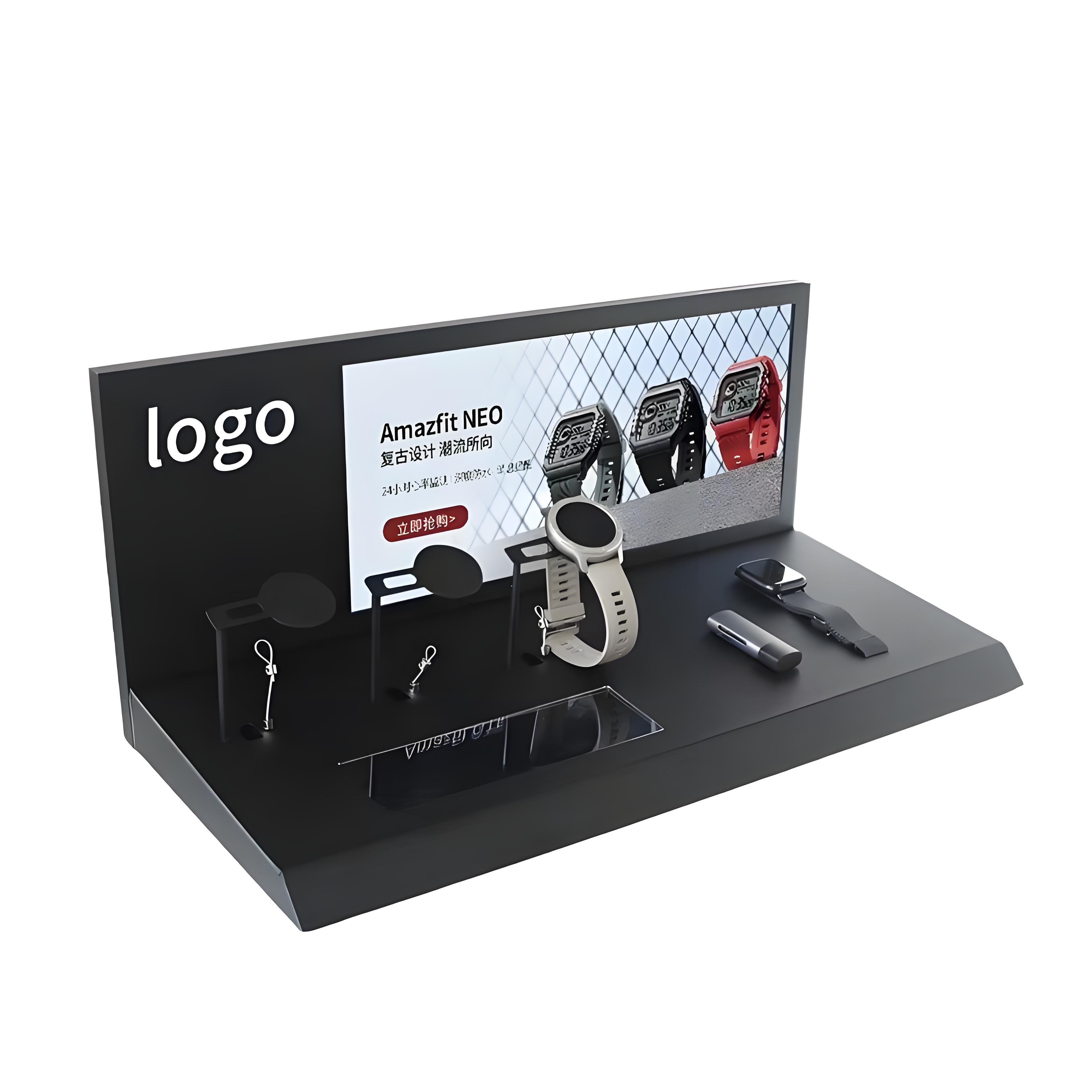
What Are Watch Display Stands?
Watch display stands are purpose-built fixtures designed to present timepieces clearly and securely in retail environments. A well-specified set of watch display stands serves two simultaneous requirements: holding the product in a stable, accessible position and communicating the brand identity of the collection on display. Getting both right in the same piece is the sourcing challenge that most buyers face when they first evaluate this category for their retail programs.
For brands and retailers sourcing watch display stands for European or North American markets, the decision involves more than aesthetics. Material finish, structural durability, security features, and customization options all influence whether a display unit will perform across its intended retail lifecycle — and whether it will reflect the brand standard the watch manufacturer expects.
Types of Watch Display Stands
Watch display stands come in several product formats, each suited to different retail environments and presentation requirements:
-
Countertop C-ring holders: Single or multi-slot acrylic watch display stands for watch bracelets or watch heads on retail counters. Compact footprint, suitable for jewelry boutiques and premium brand counters.
-
Multi-tier display racks: Freestanding or countertop structures with multiple tiers for presenting several watch pieces simultaneously. Common in department stores and multi-brand retail environments.
-
Locking display cases: Enclosed acrylic structures with locking mechanisms. Used when security is a primary requirement alongside presentation — typically for high-value timepiece collections.
-
Rotating stands: Motor-driven or manual rotation structures allowing shoppers to view watches from multiple angles without physical handling. Effective in boutique and flagship retail settings.
-
LCD-integrated watch display stands: Stands with built-in LCD or video screen panels for brand storytelling. Used at trade show booths and premium in-store activations where interactive content supports product presentation.
If your primary requirement is a clean, minimalist countertop presentation, polished acrylic C-ring holders or tiered racks are likely the right starting point. If you need to present an entire product line with security features and brand customization, locking cases or custom-fabricated structures will be closer to the specification you need.
Common Applications for Watch Display Stands
Watch display stands are used across a range of commercial environments. Understanding where your displays will be deployed helps set the right material, dimension, and security specification before you approach suppliers:
-
Retail watch stores and jewelry boutiques: Close-view presentation environments where surface quality, edge polish, and branding detail are evaluated by shoppers at proximity. Display units in these settings are often treated as part of the brand identity, not just a product holder.
-
Department store counters: High-traffic environments requiring durability alongside visual appeal. Acrylic surfaces that resist scratching and discoloration are important for multi-month deployments in these settings.
-
Trade show booths: Short-duration, high-visibility contexts where portability, setup speed, and visual impact are balanced. Lead time planning for watch display stands is often underestimated — the production window alone may not account for graphic printing approvals and freight consolidation, so building in additional buffer for cross-border shipment is advisable.
-
Brand activations and pop-up retail: Temporary installations requiring lightweight, modular configurations that can be assembled and removed efficiently by store staff without specialist tools.
How to Choose the Right Watch Display Stands
Selecting the right watch display stands requires working through a structured set of decisions before committing to a supplier or specification. The following steps reflect a practical procurement approach for B2B buyers sourcing for retail or brand programs:
-
Define the retail environment and display duration: Watch display stands intended for permanent fixtures in flagship boutiques have very different durability requirements from those used in short-duration trade show rotations. If the units will see continuous retail deployment over many months, acrylic surface quality, joint construction, and structural rigidity all become higher-priority specifications. For shorter-duration campaigns, lighter-weight or standard-format options may be appropriate.
-
Determine the number of pieces to be displayed: Single-piece presentation stands and multi-slot racks serve different visual merchandising goals. Clarifying the number of watch positions upfront prevents costly redesigns after sample approval.
-
Assess security requirements: For high-value timepiece collections, enclosed configurations with locking mechanisms are a standard requirement in most retail markets. For lower-value collections or trade show contexts, open-display formats may serve the purpose without the added cost and weight.
-
Specify branding and customization requirements: Logo engraving, UV-printed brand graphics, custom color matching, and non-standard dimensional configurations are all common requests in this category. For premium and luxury brand buyers, custom branding capability — including engraving and silk-screen application — is a standard expectation rather than an optional add-on. Clarify these requirements early, as they affect tooling costs, sample lead times, and minimum order quantities.
-
Request pre-production samples before bulk order commitment: Acrylic bonding and joint finishing quality is often only visible under retail lighting or at close inspection. Reviewing a physical sample before bulk production is the most reliable way to confirm quality alignment with your brand standard.
One consideration worth raising early in the specification process: watch display stands that look exceptional in supplier renders may not perform equally well under the atmospheric lighting of a premium boutique, where display materials are evaluated under warm, directional light rather than neutral studio conditions. That tension between visual appeal in product photography and actual in-store appearance is worth addressing before approving a production sample.
Quality Considerations for Watch Display Stands
Watch display stands serve a dual function: providing structural support for a product and communicating the brand's visual identity to the shopper. Both requirements must be met simultaneously, and suppliers that optimize for one at the expense of the other create problems at the retail deployment stage.
For acrylic formats specifically — which represent the majority of countertop and tiered options in this category — there are two quality concerns that experienced buyers prioritize:
-
Surface durability in retail use: For countertop watch display stands subject to regular handling by retail staff and shoppers, surface hardness specification and UV-protective coating are worth discussing with your supplier. Acrylic surfaces in high-traffic environments are susceptible to micro-scratching and discoloration over time when surface treatment standards are not specified at the sourcing stage.
-
Joint and bonding quality: Precision acrylic bonding is required to prevent glue marks, bubbles, or misalignment that become visible under display lighting at close range. This type of finish issue is not detectable from product photography and only becomes apparent during physical sample review or post-delivery inspection. For luxury brand programs where close-view surface quality is a brand requirement, joint inspection should be a standard part of any pre-shipment review.
For buyers sourcing watch display stands for European or North American retail markets, communicating these quality dimensions clearly to suppliers is the most reliable way to align production output with retail deployment expectations. Suppliers with documented experience serving these markets will be more familiar with the surface finish standards and documentation requirements that retail brand partners typically require.
Customization and Brand Integration
Watch display stands for branded retail programs typically require customization that goes beyond material and dimension selection. Custom-cut and edge-polished acrylic panels with consistent surface clarity reduce buyer concern about transparency variation across units in large orders. Logo application methods — engraving, UV printing, or silk-screen — affect the durability and visual quality of the brand marking under extended retail use. Color matching for brand-specific acrylic finishes, custom slot configurations for non-standard watch sizes, and structural design modifications for specific counter configurations are all standard requests in this category.
For buyers with non-standard dimension requirements or brand-specific structural design briefs, clear specification documentation and early supplier engagement — before production tooling is finalized — is the most efficient path to avoiding costly revision cycles. Both locking case formats and open-rack configurations have real merit; the right choice depends on security requirements, display duration, and brand presentation standards.

 EN