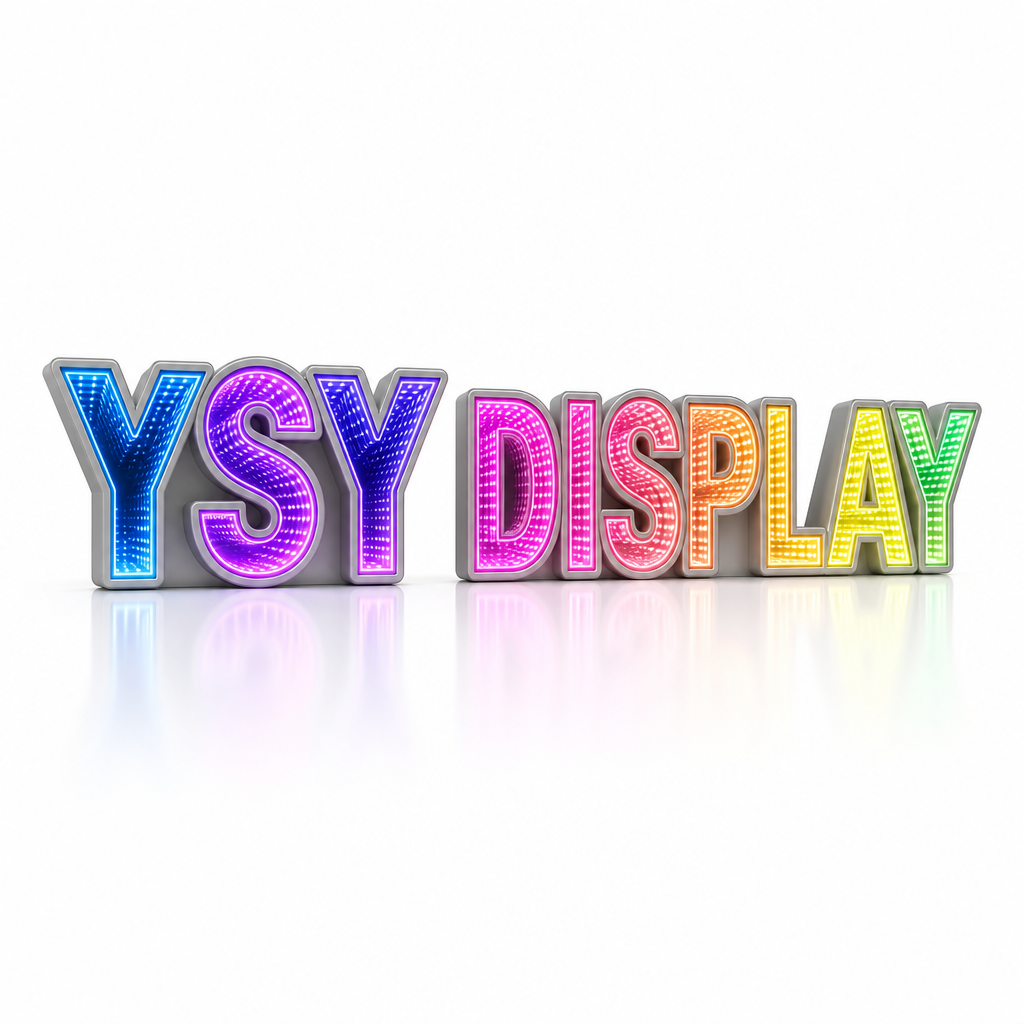
What Are Neon Light Signs?
Neon light signs are decorative and commercial lighting products that shape flexible LED neon tubes — typically silicone-encased — into letters, logos, or custom artistic forms. Modern LED neon signs have largely replaced traditional glass neon across commercial applications, offering lower power consumption, safer low-voltage operation, and longer service life, while retaining the warm, glowing aesthetic that makes neon an enduring choice for brand presence and retail atmosphere.
This category covers a broad range of products: from compact countertop pieces for salons and boutiques to large-format wall installations for restaurant interiors, retail storefronts, and event backdrops. If you are evaluating LED neon light signs for a B2B order — whether for a single venue or a multi-location rollout — understanding the key product variables will help you specify accurately and avoid costly surprises after delivery.
Key Product Characteristics
When comparing neon light signs from different suppliers, the specifications that matter most are rarely the ones listed first in a product catalog:
-
LED Tube Material: Silicone-encased LED flex tubes offer better UV resistance and heat management than PVC alternatives, particularly for installations that run continuously in high-ambient-temperature environments. If your sign will operate for extended hours each day, the tube material choice is worth specifying explicitly in the order documentation.
-
Backing Plate: Cast acrylic backing plates provide better edge finish and structural stability than extruded acrylic, which becomes especially relevant for larger-format neon light signs where deflection over time is a practical concern.
-
Power Supply Configuration: LED neon signs require compatible power supplies for the destination market — European configurations run at 230V/50Hz, while North American installations operate at 120V/60Hz. These are not interchangeable without an adaptor, and getting this wrong creates on-site correction costs that frequently exceed the sign's product value. Specify your market at the inquiry stage.
-
Color Range and Customization: The range of available colors, the capability to reproduce complex fonts and logo shapes, and the supplier's artwork-to-production workflow are key differentiators in this category. Confirm design file requirements early — particularly for brand-logo reproductions where color accuracy is brand-critical.
-
Waterproofing Rating: For outdoor or semi-outdoor installations, the IP rating (ingress protection level — meaning the degree of protection against dust and moisture) determines weather resistance. Indoor neon light signs are typically rated IP20 to IP44; outdoor-rated signs generally require IP65 or higher.
Buyers often assume lumen output is the primary indicator of LED sign quality, but in real deployment conditions, the contrast ratio between lit and unlit elements has more influence on readability in mixed-light retail environments. What looks bright in a factory sample review can appear significantly dimmer once installed in a high-ceiling retail space with strong overhead lighting — and this gap is frequently missed until the neon sign is already mounted on the wall.
Common Applications for Neon Light Signs
Neon light signs serve a wide range of commercial and event environments. Understanding the typical use cases helps clarify which product specifications are relevant to your sourcing requirement:
-
Retail Storefronts and Brand Walls: LED neon signs create strong visual identity markers at entry points or feature walls. Retail applications typically prioritize color consistency across multiple units and continuous-operation reliability over long daily usage periods.
-
Restaurants, Bars, and Hospitality Venues: Atmospheric lighting through neon signage contributes to interior brand personality. These settings often require custom typography or logo reproductions and benefit from dimmer-compatible power supplies that allow adjustment across service periods.
-
Beauty Salons, Spas, and Wellness Studios: Smaller-format custom neon signs — phrases, icons, or logo pieces — have become a signature interior element in this sector. Orders here tend to be lower-volume with high customization specificity.
-
Wedding Events and Private Celebrations: Single-use or rental neon light signs for events represent a distinct procurement segment. For event-focused buyers, portability, packaging robustness, and quick setup tend to rank above long-term durability in the selection criteria.
-
Gaming Rooms, Social Media Studios, and Brand Activations: Backdrop neon signs for photography and content creation have driven significant demand. These buyers typically seek distinctive phrasing, custom colors, and competitive turnaround timelines.
-
Trade Show Displays and Exhibition Booths: Illuminated brand identity pieces for trade show use require compact dimensions, straightforward assembly, and reliable performance under the compressed timeline of exhibition setup days.
How to Choose the Right Neon Light Sign
If you are sourcing neon light signs for a long-duration retail installation, then component quality — particularly the LED driver and silicone tube grade — deserves as much attention as the visual design. If your application is event-based or short-term, a well-specified standard configuration often delivers better value than over-engineering for durability you will not use.
A practical selection framework for B2B buyers evaluating neon sign suppliers:
-
Define the Usage Environment: Indoor vs. outdoor, ambient light level, daily operating hours, and whether the sign will be permanently installed or transported between locations all influence the appropriate specification tier and IP rating requirement.
-
Confirm Market Voltage Compatibility: Specify your destination market power standard at the inquiry stage. Neon signs shipped to Europe operate on 230V; North American installations require 120V. Discovering this discrepancy after delivery means sourcing replacement power supplies locally, which adds cost and delays installation.
-
Review Color and Font Reproducibility: Complex script fonts and multi-color designs require more precise manufacturing control than simple block lettering. Request a pre-production graphic approval step — this is particularly important for brand-logo reproductions where Pantone or exact color matching is required for brand compliance.
-
Clarify Packaging and Delivery Standards: Custom neon light signs are fragile in transit. Packaging specifications and damage-on-arrival protocols should be confirmed before bulk orders. Packaging adequate for domestic freight may not be sufficient for international sea shipments over three to four weeks at sea.
-
Plan Lead Time Realistically: It is straightforward to underestimate lead time for custom LED neon signs when a supplier quotes a standard production window — that window often does not account for design approval rounds, graphic revision cycles, and freight consolidation delays before departure. For event or campaign-linked neon sign orders, plan backward from the required installation date rather than the order placement date.
When reviewing supplier documentation, look for references to relevant industry testing or performance standards for LED electrical products — while specific certification numbers should always be confirmed directly with the supplier before citing them as verified facts, acknowledgment of CE, UL, or equivalent certification paths is a useful credibility indicator during initial evaluation.
B2B Sourcing Considerations for International Buyers
Buyers importing neon light signs into European or North American markets should account for certification and documentation requirements. LED products entering EU markets commonly require CE marking; North American markets typically expect UL or ETL listings for electrical display products. These requirements are not uniform across all sales channels, but corporate procurement processes and major retail chain supplier onboarding programs frequently require documentation at onboarding. Confirming certification scope before selecting a supplier reduces compliance risk later in the procurement cycle.
LED neon technology continues to evolve — energy efficiency benchmarks, slim-profile backing designs, and controller options have all advanced noticeably in recent production cycles. For buyers making long-duration investments in neon light signs, it is reasonable to ask suppliers about product line continuity and spare component availability. A specification that cannot be reordered for a multi-store rollout creates an unnecessary operational dependency that becomes apparent only when a replacement unit is needed.
For buyers managing multi-market or multi-location programs, pre-adapted LED power configurations for different regional voltage standards reduce buyer-side compliance workload during rollout. This is a practical specification detail worth confirming at the quotation stage, rather than discovering during installation at the destination site.

 EN