Clothing & Shoe Display Racks: Category Overview
Clothing & Shoe Display Racks are purpose-built retail fixtures designed to present apparel, footwear, and accessories in organized, visually engaging configurations. From freestanding multi-zone floor stands to coordinated wall-mounted systems, these fixtures cover a broad range of formats that help retail stores — from boutiques and sportswear retailers to brand flagships and pop-up environments — present their merchandise in a way that aligns with both product function and brand identity.
In visual merchandising, the way a display rack is structured directly affects how shoppers engage with the products on it. A well-configured rack does more than hold inventory; it creates a presentation hierarchy that guides the shopper's eye, communicates brand values, and makes product selection intuitive. For B2B buyers sourcing Clothing & Shoe Display Racks for European or North American retail markets, this dual function — structural product containment and brand communication — is the central specification challenge that separates adequate fixtures from effective ones.
Key Product Characteristics
The fixtures in this category are built around a core principle of adaptability. Metal construction — including steel frames and tubular systems — forms the structural backbone, offering a balance of load-bearing capacity and visual clarity that works across a range of retail environments.
-
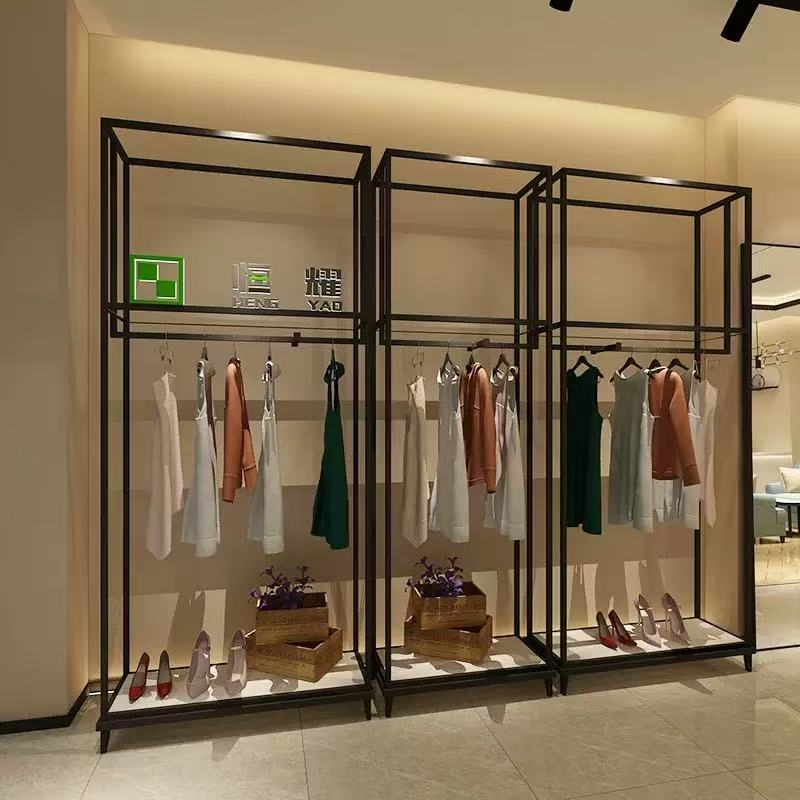
Multi-Zone Configuration: Display stands such as the XH-MT-004 organize multiple product categories within a single vertical unit — a top platform for brand signage and logo panels, a central hanging bar for garments, and a lower shelf for shoes or accessories. This allows a single fixture to serve a coordinated outfit presentation or a product-range display without requiring multiple separate units.
-
Custom Dimensions and Finishes: Size, color, and surface finish can be specified to match store planogram requirements or brand identity guidelines. Logo printing is available for branded retail programs. This customization capability matters for buyers with non-standard dimensional requirements or specific material and finish standards.
-
ISO-Certified Production: Where production standards are specified, fixtures are manufactured under ISO-certified processes, supporting documentation requirements for European and North American import and retail compliance.
-
Material and Accessory Options: Metal framing (steel, iron, aluminum alloy) can be combined with accessory elements including shelving panels, hanging bars, and label holders to create a complete display system. Buyers evaluating a custom acrylic display cabinet or frameless glass display case for a premium product zone should consider how these metal frame racks can serve as a structural complement to lighter-weight display materials within the same retail floor layout.
Common Applications
Clothing & Shoe Display Racks are deployed across a wide range of retail environments, each with distinct configuration requirements:
-
Clothing and Footwear Boutiques: Freestanding multi-zone racks support a curated product mix where garments and coordinated footwear are presented together. The structural hierarchy of hanging bar plus lower shelf reflects the natural progression of a styled outfit presentation and makes it easy for shoppers to view coordinated looks in a single fixture.
-
Sports and Activewear Retailers: High-traffic environments require robust metal construction. In these settings, load capacity and stability are the dominant functional criteria, while logo branding capability supports seasonal campaign displays and helps the fixture serve as an active brand touchpoint within the retail floor.
-
Brand Campaign and Promotional Programs: For retail brands running seasonal or promotional campaigns, custom-specified racks serve as branded fixtures that communicate the campaign's visual identity. A fixture designed for a spring footwear launch can integrate brand-color finishes and logo panels that align with pop up marketing banner assets and in-store promotional materials deployed as part of the same campaign program.
-
Pop-Up Stores and Temporary Installations: Modular designs that can be assembled and disassembled efficiently are well-suited to temporary retail environments. Buyers planning temporary installations alongside a tabletop retractable banner or portable signage setups often specify fixtures that share a consistent visual language with the broader display system, creating a cohesive brand presentation from floor rack to branded banner.
-
Luxury and Premium Retail: In environments where a frameless glass display case or a custom acrylic display cabinet is used for accessories or featured footwear, coordinated metal clothing and shoe racks should align in visual weight and finish quality to maintain display cohesion across the retail floor.
How to Select Clothing & Shoe Display Racks for Your Retail Program
Selecting the right fixtures for a clothing and shoe retail program requires working through several specification decisions. A step-by-step approach helps clarify requirements before supplier conversations begin:
-
Define the Display Environment: Identify the retail format — boutique, chain store, trade show, or pop-up — and the space available. Floor display footprint, aisle clearance, and ceiling height all affect viable configurations. For flagship store environments specifically — where visual impact and brand consistency are closely managed — the display height should be coordinated with the store planogram before specifying dimensions. One frequently overlooked detail is that intended eye-level height may vary between European and North American retail contexts, which can affect how visible the brand signage actually is when deployed in different markets.
-
Set the Product Mix: Determine whether the fixture needs to accommodate garments only, footwear only, or a combination. Multi-zone Clothing & Shoe Display Racks that combine hanging bars with shelving are the right choice when both product types need to be presented together. Single-category configurations allow for a simpler, more focused setup where product-range complexity is lower and the priority is maximizing the density of a single product type.
-
Specify Customization Requirements: If your program requires logo printing, brand-color finishes, or specific dimensional adjustments, establish those requirements before requesting samples. Display product customization is the norm rather than the exception — most branded retail programs require branded, sized, or structurally modified products rather than standard catalog items. Suppliers with full in-house capability to manage logo integration, sizing, and material selection are better positioned to deliver consistent results across a multi-location rollout.
-
Assess Load Capacity and Durability: If fixtures will be in continuous use in a high-traffic retail environment, structural durability is a primary criterion. Metal frame systems are the appropriate baseline for permanent or semi-permanent installations. If the application is a short-duration campaign or pop-up event, the durability requirement may be lower — though for reuse across multiple seasons, the upfront investment in a more durable structure generally pays back over the program lifecycle.
-
Request Samples Before Bulk Orders: The specification process for Clothing & Shoe Display Racks is iterative. A physical sample allows you to verify dimensions, finish quality, structural stability, and the visual effect of logo printing under actual store lighting conditions before committing to bulk production. Buyers managing programs for European and North American markets should confirm documentation and compliance requirements alongside sample review to avoid delays at the import stage.
Sourcing Considerations for Retail Display Buyers
The retail fixture category has a characteristic that experienced buyers recognize: customization is the default, not an add-on. Standard catalog items rarely satisfy the full requirements of a branded retail program. Logo, color, dimension, and structural requirements are typically specified at the outset, making a supplier's customization capability — across sizing, finishing, and print integration — a primary evaluation criterion alongside unit price.
For international buyers managing programs that span European and North American markets, the quality documentation and production consistency standards required in these markets add an additional evaluation layer. Both product specifications and the supplier's ability to provide accurate compliance-relevant documentation should be assessed when selecting a supplier of Clothing & Shoe Display Racks for cross-border procurement programs.
If your priority is a consistent branded presentation across multiple store locations, you will want to focus on a supplier's reorder consistency and finish-matching capability. Both economy-tier and premium-tier fixtures have real merit — the right choice depends on the duration of the program, the visual standards of the retail environment, and the campaign budget available for the seasonal cycle. A rack with a premium finish does not guarantee product engagement on its own; placement, product mix, and the visual coherence of the full display system all contribute to the commercial outcome.
Buyers evaluating a complete store fitting solution — combining Clothing & Shoe Display Racks with coordinating shoe shelves, signage supports, or complementary display formats such as a custom acrylic display cabinet — benefit from working with a supplier with multi-category capability. This reduces the coordination complexity of managing separate vendor relationships for different fixture types within the same retail program, and ensures dimensional and finish consistency across the full installation.

 EN