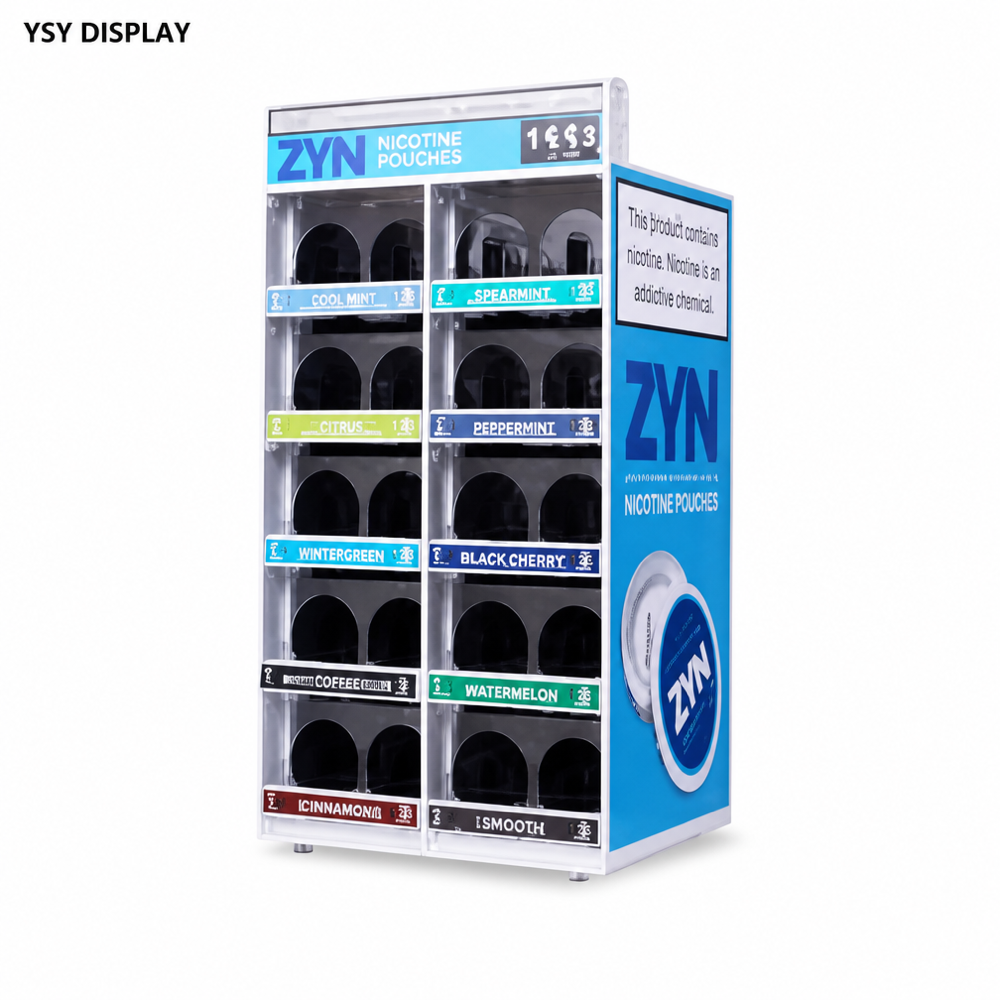
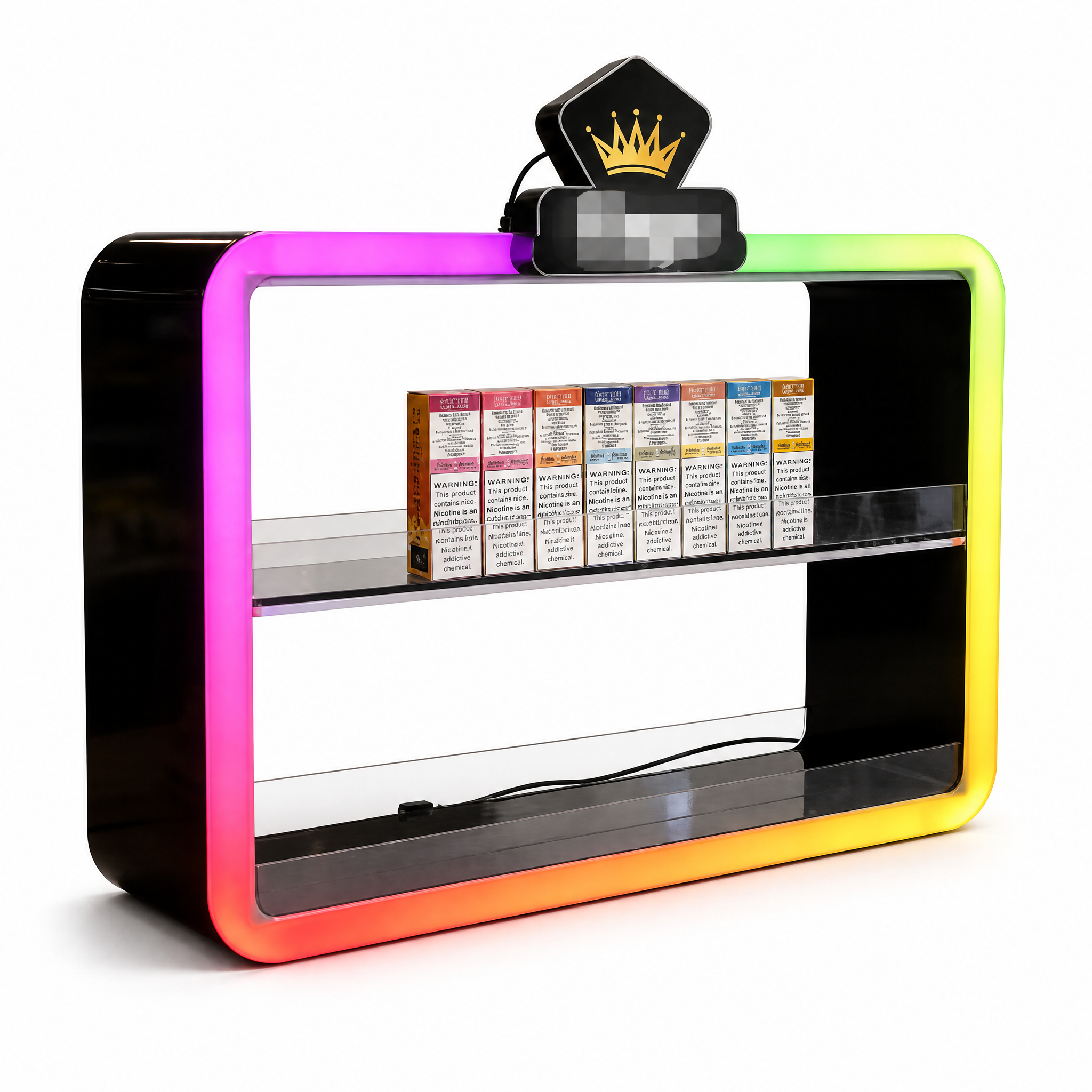
What Are Tobacco Shop Display Racks?
Tobacco shop display racks are purpose-built retail fixtures designed to organize, protect, and present tobacco products — including cigarettes, cigars, roll-your-own products, and accessories — in compliant, accessible, and visually structured retail environments. As a procurement specialist who has sourced display materials across multiple retail programs, I've seen firsthand how tobacco shop display racks function as both organizational hardware and brand communication tools. Unlike generic shelving, these fixtures are evaluated on two dimensions simultaneously: structural performance under daily restocking demands, and visual impact in environments where product browsing decisions happen quickly.
The tobacco display category spans fixtures for convenience stores, smoke shops, specialty tobacco retailers, and supermarket tobacco sections — each with distinct layout requirements and, in most markets, specific regulatory configurations. If your retail deployment involves compliance-mandated configurations (such as opaque door requirements or restricted-access controls), then the fixture you choose needs to support these requirements by design, not as an afterthought.
Key Characteristics of Tobacco Shop Display Racks
Well-specified tobacco shop display racks combine structural containment and brand presentation — meeting both dimensions matters equally. The following characteristics define the category:
-
Adjustable shelving systems: Shelves configurable for different product formats — standard pack heights, slim pack variants, and cigar boxes — allow retailers to adapt the fixture to product range changes without replacement.
-
Locking mechanisms: Integrated lock options restrict access to products, supporting age-verification compliance requirements in markets where point-of-sale tobacco regulations apply.
-
LED lighting integration: Built-in LED backlighting (meaning illumination panels that highlight product labels from behind or above) improves product visibility in low-light service areas and supports brand recognition for premium tobacco lines.
-
Transparent front panels: High-clarity acrylic or PET fronts allow product browsing without physical access, reducing handling while maintaining visual engagement.
-
Auto-push and shelf pusher compatibility: Spring-loaded shelf pushers maintain front-facing product presentation automatically, reducing staff time spent on restocking alignment.
-
Modular and tool-free reconfiguration: Modular designs allow retailers to adjust rack configurations in response to product range updates or compliance changes without specialist tools.
-
Durable, easy-to-clean materials: Acrylic, ABS plastic, and metal frame construction support the durability requirements of high-frequency retail environments where tobacco displays are accessed multiple times per day.
Both products in this category — the acrylic-and-metal XH-MT-001 stand and the LED Tobacco Shop Display Stand — reflect these characteristics, with custom sizing, logo printing, and lock configuration available for branded retail programs.
Common Applications
Tobacco shop display racks are deployed across a range of retail formats and environments:
-
Convenience stores: Positioned behind the service counter with compliance-mandated visibility or access restrictions depending on local market rules.
-
Specialty smoke shops: Where premium product presentation and brand organization both contribute to the retail experience.
-
Supermarket tobacco sections: Integrated into planogram-defined space allocations with retailer-specified structural and material requirements.
-
Duty-free and travel retail: Where compact design and high-density product organization support high-traffic, fast-browsing retail environments.
In practice, the effectiveness of a tobacco shop display rack in a retail setting depends heavily on its position relative to the natural shopper path — a detail that's easy to miss when viewing the display in isolation. Counter placement near the transaction area typically performs better for tobacco categories than side-aisle placement, because transaction-proximity purchasing behavior is more consistent for this product type.
How to Choose the Right Tobacco Shop Display Rack
Selecting tobacco shop display racks for a retail deployment involves more than matching product dimensions to shelf slots. Here is a practical step-by-step framework for B2B buyers and retail procurement managers:
Step 1 — Define your compliance requirements first. Before evaluating structural features, confirm what your target retail market requires. Buyers sometimes discover that display products do not meet fire safety requirements for their target retail market — a compliance gap that creates liability risk at deployment. If you are sourcing for European retail environments, confirm material safety and fire-rating requirements for fixtures used in public spaces. When making claims about materials used in regulated retail environments, reference the relevant official certification framework for your target market and verify current requirements with official sources before finalizing specifications.
Step 2 — Specify your retail layout constraints. Tobacco display placement is often governed by retailer planogram requirements and aisle clearance rules. If your deployment involves a retail chain with specified floor space allocation standards, confirm that display dimensions comply before placing an order. One frequently overlooked detail in tobacco shop display rack specification is that the intended counter height (meaning the eye-level alignment with the service area or restricted-access configuration) may vary between European and North American retail environments, which can affect both compliance positioning and product visibility in the field.
Step 3 — Choose materials based on use environment and durability expectation. If your retail deployment involves high daily access frequency — convenience stores with multiple staff restocking shifts per day — then metal frame combined with high-clarity acrylic panels typically outperforms pure plastic construction on structural alignment over time. Both acrylic and metal-acrylic hybrid options have real merit: the right choice depends on whether your priority is maximum visual clarity (acrylic-forward construction) or structural rigidity under repeated load (metal-reinforced framing).
Step 4 — Confirm customization requirements early. If your retail program requires custom logo printing, specific LED light color options, or a non-standard footprint, confirm dimensions, logo placement specifications, and lock configuration with the supplier before production begins. Display programs targeting brand consistency across a multi-store rollout benefit from confirming these parameters upfront to avoid reorder mismatch later in the program. The LED Tobacco Shop Display Stand reference size of 332 × 145 × 773 mm, for example, may need adjustment for different counter configurations — this type of non-standard dimension is typically supported through direct supplier customization.
Step 5 — Request samples and assess packaging specifications. Buyers who source acrylic display stands internationally often discover that edge chipping and surface scratching is a packaging problem, not a product quality issue — but it still results in replacement costs and delayed launches. Before committing to a bulk order, verify how the unit is packaged for international shipping and what the supplier's packaging protection standard covers for fragile acrylic and LED components. The process is iterative: samples allow you to assess real-world unit condition on arrival before production commitment at scale.
Sourcing Considerations for International Buyers
Tobacco shop display racks are a specialized procurement category, and display products often need to meet retailer-imposed specifications before a brand or retailer can deploy them in-store. This is particularly relevant for buyers in European and North American markets, where retail chains may require material compliance documentation before fixture approval. Suppliers with proven experience serving buyers in these markets — understanding lead time expectations, documentation requirements, and quality standards — can meaningfully reduce friction at the compliance review stage.
Customization capability is a practical consideration for most tobacco retail display programs. If your procurement requirement involves non-standard dimensions, custom logo printing, specific acrylic tints, or LED light color selection, confirm that the supplier's production scope covers these parameters directly. Buyers managing multi-store rollouts sometimes coordinate fixture specifications through an exhibition booth design company or retail display program manager — in these cases, ensure the manufacturer can accommodate specification documents from external design teams without additional engineering overhead.
If your retail program also involves supplementary counter-area marketing materials — such as a marketing banner stand for point-of-sale promotion alongside the tobacco display — sourcing complementary formats from a single supplier can simplify logistics coordination and reduce the number of vendor relationships required for a complete retail activation.
ISO 9001 certification at the manufacturing level supports documentation-heavy procurement processes, particularly for buyers who need to satisfy internal supplier approval workflows before a first order. Confirming manufacturer certifications upfront avoids delays at the corporate procurement approval stage.
Summary: Selecting Tobacco Shop Display Racks for Retail Programs
Tobacco shop display racks serve a dual purpose in the retail environment: managing product organization and compliance-mandated access control while simultaneously supporting brand presentation at the point of purchase. Choosing the right fixture requires working through compliance requirements, retail space constraints, material durability expectations, and customization needs in sequence — rather than defaulting to the most familiar or lowest-cost option. If your priority is long-term program consistency across a multi-store chain, investment in a well-specified, customizable tobacco shop display rack system is typically recovered across the reorder lifecycle. If you are in early-stage evaluation, a sample order with clear packaging and quality specifications is the right starting point before committing to bulk production.

 EN