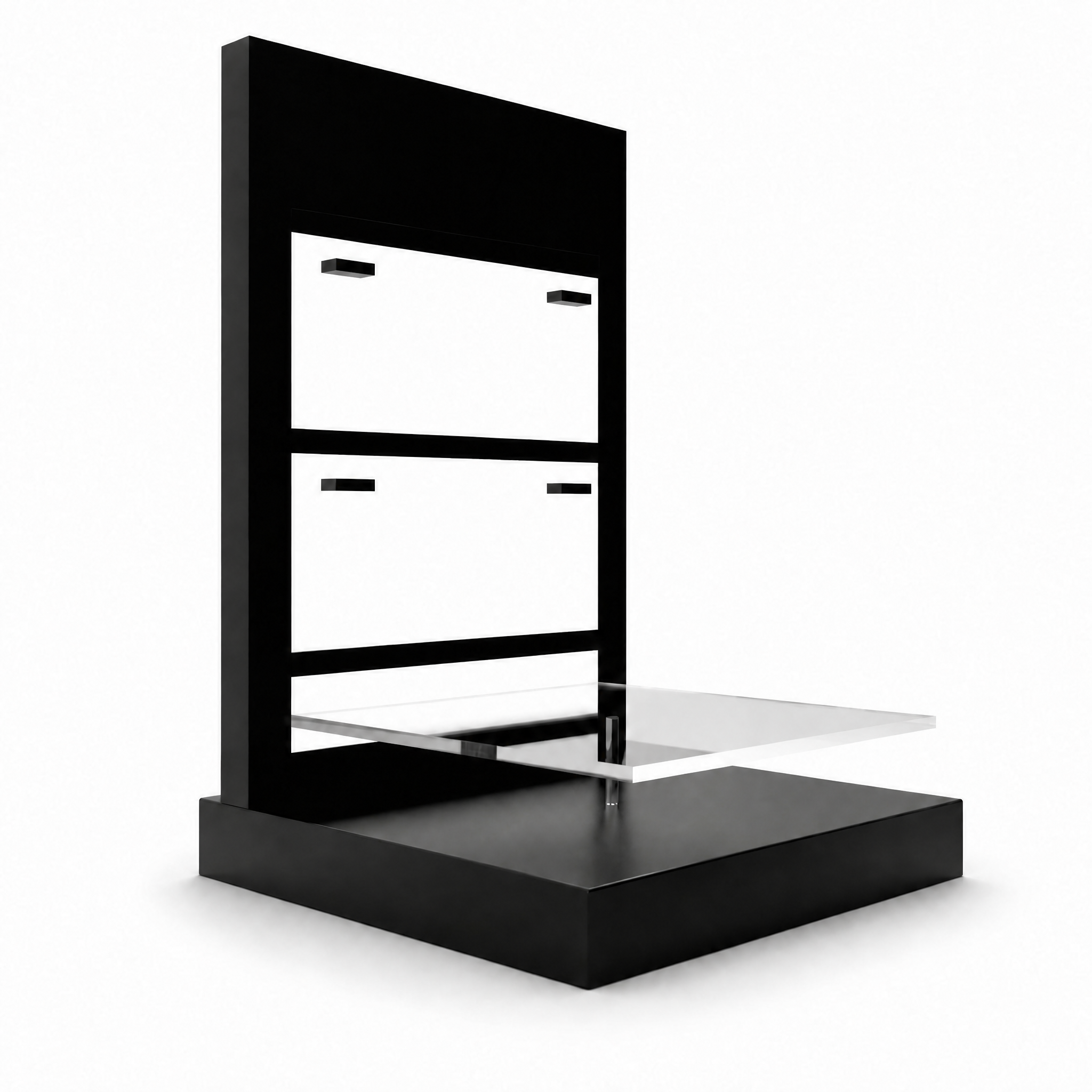
What Are Illuminated Displays?
Illuminated displays are purpose-built retail fixtures that integrate LED lighting directly into the display structure — combining product presentation with controlled light output to draw shopper attention in a planned, brand-consistent way. Unlike standard countertop or wall-mounted display stands, illuminated displays use LED modules embedded in an acrylic or frame structure to create visible contrast between the product and its surroundings, regardless of the ambient light level in the store.
This category covers a range of illuminated displays: countertop LED acrylic display stands, edge-lit panel displays, backlit framed fixtures, and custom-configured LED structures designed around specific product types. The defining characteristic of illuminated displays is the integration of the light source into the display structure itself — making each illuminated display a functional part of the brand presentation, not just a product shelf. For buyers sourcing for retail environments in Europe or North America, illuminated displays are increasingly a standard component of premium brand counters and optical retail installations.
Types of Illuminated Displays
Understanding the main configuration types helps narrow the specification before requesting a quote. The three most common illuminated display formats are:
-
Backlit illuminated displays use an LED panel mounted behind a diffuser surface, typically requiring a frame depth of 60–100 mm. This configuration delivers strong, uniform illumination across a larger visible area and is suited to wall-mounted retail signage and brand wall installations.
-
Edge-lit illuminated displays use LEDs running along the panel edge (meaning the LEDs run along the perimeter rather than behind the full surface), allowing a slimmer 25–40 mm profile. This format is better suited to countertop POS applications where counter depth is limited.
-
Integrated LED acrylic display stands combine structural product presentation with LED lighting in a single unit — the format most relevant for this category, including LED acrylic eyewear display stands for optical shops and sunglasses retail counters.
Key Product Characteristics
When evaluating illuminated displays for a specific retail application, the following specifications are most likely to affect performance in deployment:
-
LED configuration and frame depth: The most consequential decision for illuminated displays is whether the product uses backlit, edge-lit, or side-lit LED technology. Backlit illuminated displays (60–100 mm frame depth) provide stronger, more uniform illumination across larger panel areas. Edge-lit illuminated displays (25–40 mm profile) deliver a slimmer, lower-weight fixture better suited for countertop and POS applications.
-
Acrylic panel and diffuser material: The acrylic sheet used in illuminated displays determines how light is distributed across the visible surface. Milky white acrylic diffuses light evenly for general retail environments. Frosted acrylic creates a softer, more premium appearance suited to luxury or cosmetics brand counters. UV-printable acrylic allows branded graphics to be directly incorporated into the illuminated surface.
-
Color temperature selection: Illuminated displays are available in neutral white (4000–5000 K), which suits most retail and optical environments, or warm white (2700–3500 K), which creates a softer, more intimate feel suited to jewelry or cosmetics presentations. Selecting the wrong color temperature for the store environment is one of the most common specification mistakes — the illuminated display will look inconsistent with the surrounding store lighting.
-
Custom dimensions and layer configuration: Most illuminated display programs require at least partial customization to match retail planogram dimensions, product dimensions, or brand identity requirements. Custom layer count, shelf depth, and overall footprint are standard configuration options for countertop LED acrylic illuminated displays.
-
Logo printing and branding surface: Logo printing directly onto the acrylic or frame structure allows illuminated displays to function as branded POS fixtures, not just product holders. This is particularly relevant for multi-store or franchise rollout programs where brand consistency across locations is a procurement requirement.
Common Applications for Illuminated Displays
From a visual merchandising perspective, the way illuminated displays are deployed in a retail environment directly affects shopper dwell time and purchase intent. The most established applications for illuminated displays include:
-
Optical and eyewear retail: LED acrylic eyewear illuminated displays are used in optical shops and sunglasses retail counters to present frame collections with consistent lighting, divided storage for model segregation, and a premium visual appearance that supports higher price points.
-
Cosmetics and personal care counters: The demand for illuminated displays with strong visual impact in low-light or atmospheric retail environments — premium cosmetics stores, perfume boutiques, or department store concessions — drives specific requirements for backlighting uniformity, material finish, and color temperature consistency.
-
Branded POS and retail signage: Illuminated displays designed for retail store signage and brand wall installation use LED technology calibrated for ambient light competition in high-ceiling or well-lit store settings. Always-on illuminated displays in shopping mall brand walls and airport-format advertising installations benefit from energy-efficient LED technology that materially reduces long-term operating costs.
-
Jewelry and luxury product presentation: Premium product countertop illuminated displays in jewelry boutiques and luxury retail use backlit acrylic structures to create controlled lighting environments that enhance product appearance while maintaining a clean, uncluttered visual identity.
-
Multi-store and franchise rollout programs: Brand owners and retail chains deploying illuminated displays across multiple store locations require consistent manufacturing quality and reproducible LED output specifications across production runs. Reorder consistency — matching the original color temperature, brightness level, and acrylic finish — is a functional procurement requirement for franchise programs using illuminated displays.
How to Choose Illuminated Displays
You don't need to be a materials expert to evaluate illuminated displays — these four questions will tell you most of what you need to know before requesting a quote.
-
Define your installation environment first. Counter depth, available wall space, and ambient lighting conditions all determine whether an edge-lit countertop unit or a backlit illuminated display format is the right starting point. What looks bright in a factory sample review can appear dim once installed in a high-ceiling retail space with strong overhead lighting — and this gap is frequently missed until the illuminated display is already mounted. Confirm the ambient light level of your target environment before finalizing the LED specification.
-
Set your color temperature requirement before reviewing samples. Neutral white and warm white outputs produce visibly different results against the same product. If your store uses warm ambient lighting, a neutral white illuminated display will look inconsistent. Align the color temperature of illuminated displays to your existing store lighting specification before placing a bulk order.
-
Confirm voltage compatibility for your target market. LED power supplies in illuminated displays are not universally compatible across markets — European installations require 230V-rated components; North American installations typically operate at 120V. Before requesting a quote, it's worth confirming the target market voltage standard so you're comparing suppliers on equal terms. Buyers sourcing illuminated displays for the EU or North American markets should request documentation on power supply configuration as part of the product specification review.
-
Evaluate packaging specifications alongside product specifications. Buyers who source LED acrylic illuminated displays internationally often discover that edge chipping and surface scratching is a packaging problem, not a product quality issue — but it still results in replacement costs and delayed launches. Request packaging details — foam insert type, carton strength, and inner bracing method — as part of the sample approval process, not after the first bulk shipment arrives.
If your deployment involves multiple store locations or a multi-season rollout, a fifth consideration applies: production consistency across reorders. LED output and acrylic finish matching between production runs is a known challenge for illuminated displays, particularly when sourcing from manufacturers who do not maintain LED component specification consistency between orders.
Why Illuminated Displays Matter for Brand Buyers
Buyers often assume lumen output is the primary indicator of LED display quality, but in real deployment conditions, the contrast ratio between the lit and unlit elements has more influence on readability and product visibility in mixed-light retail environments. A higher-output illuminated display with poor diffuser selection or misaligned color temperature will consistently underperform a lower-output unit with well-matched specifications for the installation environment.
LED technology in illuminated displays has evolved substantially in recent years — slim-frame designs, energy efficiency ratings, and LED pitch densities have all improved. If you're making an investment in a multi-year retail fixture program, it's reasonable to ask suppliers about their component sourcing practices and whether they maintain LED specification consistency across production cycles. Energy-efficient LED technology in illuminated displays can materially reduce long-term operating costs for buyers using these fixtures in always-on retail environments — and this is worth calculating explicitly for programs involving 24-hour retail lighting or multi-location deployments.
For buyers supplying the European or North American markets, illuminated displays pre-configured for local power and safety standards reduce the compliance preparation required on the buyer side. Import documentation, material safety considerations for public retail spaces, and voltage pre-configuration are all factors worth confirming with prospective suppliers before committing to production — particularly for first-time cross-border programs involving illuminated displays.
The most reliable path to a satisfactory illuminated display program is a well-specified sample approval process: confirm LED output level, color temperature, acrylic finish, logo print quality, and packaging protection before bulk production begins. This approach is more time-efficient than managing quality claims after a full shipment of illuminated displays has arrived at the destination warehouse.

 EN