What Are Floor-standing Cardboard Displays?
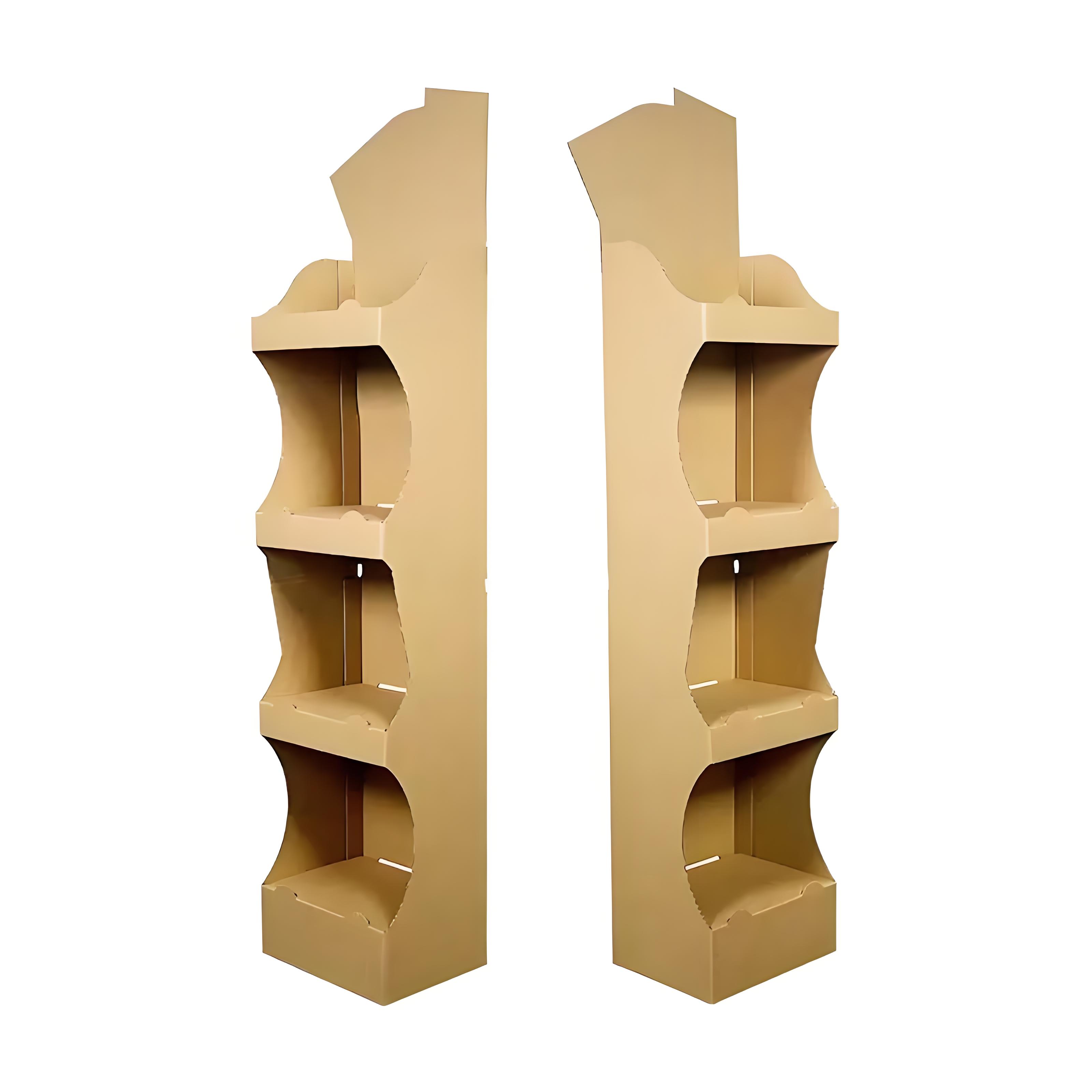
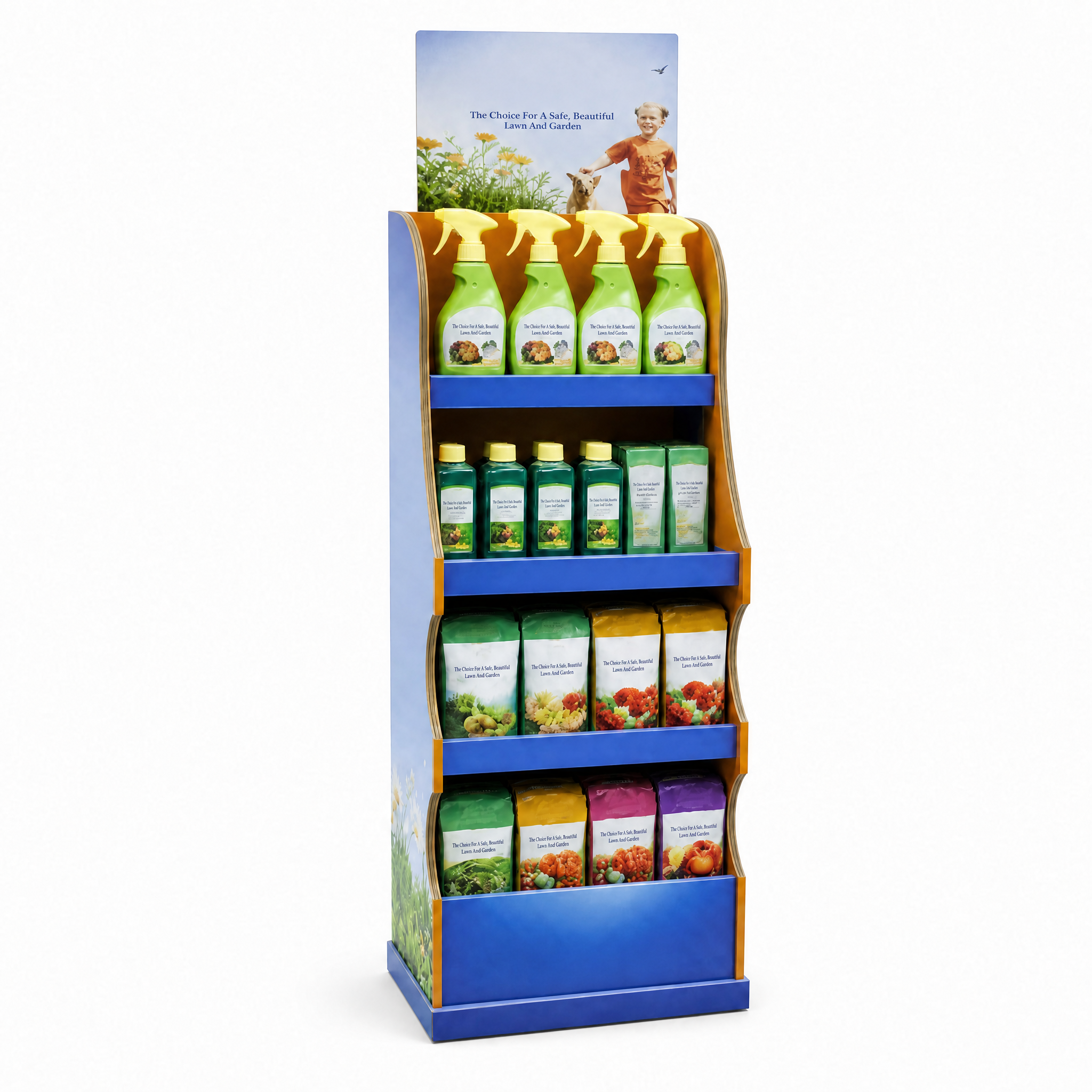
Floor-standing cardboard displays are freestanding retail fixtures made from corrugated or solid cardboard, designed for point-of-sale product presentation without the need for wall or shelf mounting. These floor-standing cardboard displays are deployed at retail floor level — in supermarket aisles, convenience store entrances, pharmacy promotional zones, and trade show floors — to drive product visibility during campaigns or seasonal promotions.
The category includes a range of structural formats: tiered display stands, dump bins, sidekick units, pallet-style floor displays, and hook-equipped floor racks. All are manufactured from corrugated paperboard, engineered for flat-pack shipping, and typically assembled without tools at the point of deployment.
Key Product Characteristics
Buyers evaluating floor-standing cardboard displays typically look for a combination of structural reliability, print quality, and logistics efficiency. The following characteristics define what distinguishes one set of floor-standing cardboard displays from another at the specification stage:
-
Flat-pack transport: Floor-standing cardboard displays ship in compact flat-pack format, reducing freight volume and cost — a meaningful advantage for international buyers sourcing from China to Europe or North America.
-
Full-color custom printing: Corrugated surfaces support direct printing, lamination, and graphic wrapping for branded presentation. Custom color, logo, and graphic design are standard options across product types.
-
Structural load capacity: Different corrugated grades — single-wall, double-wall, heavy-duty fluted board — support different product weight ranges. Selecting the appropriate grade is a decision that should happen before finalizing structural design, not after bulk production.
-
Quick in-store assembly: Most floor-standing cardboard displays are designed for tool-free setup by retail staff. Clear assembly instructions and interlocking tab-and-slot construction reduce deployment errors in high-staff-turnover environments.
-
Recyclable materials: Cardboard displays are generally recyclable at end of campaign, supporting retailer sustainability commitments and brand ESG positioning — particularly relevant for European market deployments where packaging regulations are tightening.
-
Custom sizing: Width, height, shelf count, and overall footprint can be adapted to specific retail floor plans, planogram specifications, or product dimensions, supporting both standard and non-standard format requirements.
Common Applications
Floor-standing cardboard displays are deployed across a wide range of retail environments and campaign types. Common use contexts include:
- Supermarket and hypermarket aisle-end or off-shelf promotional programs for FMCG, beverages, snacks, and seasonal product launches
- Pharmacy floor zones for health, beauty, and over-the-counter campaign periods
- Specialty and general retail stores for branded product category presentations and impulse purchase merchandise
- Trade show exhibition floors for product sampling, campaign launches, and brand activations requiring rapid setup and teardown
- Convenience store entrance programs for high-visibility short-duration promotions
- Shopping mall installations for limited-duration campaign periods where recyclable, cost-effective fixtures are preferred
If your priority is a defined-duration campaign where recyclability and low unit cost matter more than structural longevity, floor-standing cardboard displays are typically more appropriate than permanent wood or metal fixtures. If the display will remain in-store for more than eight to twelve weeks, or carry heavy product loads continuously, material grade selection becomes especially important.
How to Choose the Right Floor-standing Cardboard Display
Selecting the right floor-standing cardboard displays starts with defining your deployment environment — not with the display format itself. Working through the following steps before requesting a quote reduces the risk of misspecification and late-stage design changes.
Step 1: Define use environment and campaign duration. Identify where the floor-standing cardboard displays will be placed, how long they will remain deployed, and what ambient conditions they will face. High-humidity retail environments affect structural performance differently from air-conditioned trade show floors. A display engineered for a two-week promotional campaign has different requirements from one expected to last through a full seasonal period.
Step 2: Set structural and load requirements. What is harder to predict before deployment is how floor-standing cardboard displays hold up when stacked with actual product weight — particularly after two to three weeks in a warm retail environment. Discuss your product's per-shelf weight distribution with your supplier before finalizing the corrugated grade. Heavier loads require double-wall or reinforced construction; lighter consumer goods can use standard single-wall board.
Step 3: Define customization and branding requirements. Most brand buyers sourcing floor-standing cardboard displays require full custom printing at minimum — logo, brand colors, campaign graphics. Additional options include structural format modification, custom size, shelf or hook count, and material finish specification. Most sourcing managers who go through this process find that submitting complete print-ready artwork files upfront significantly reduces revision rounds and protects campaign timelines against last-minute print delays.
Step 4: Confirm logistics and assembly requirements. It is easy to underestimate the total lead time for custom floor-standing cardboard displays when a supplier quotes a standard production window — the full timeline often does not account for artwork approval rounds, freight consolidation, and port clearance to European or North American destinations. For campaign-timed orders, plan around total delivery lead time rather than production time alone. Assembly instructions should be tested before bulk delivery, particularly for multi-location rollouts where retail staff handle setup without on-site supervision.
Step 5: Evaluate sustainability positioning. Choosing recycled or certified-source cardboard for floor-standing cardboard displays aligns with sustainability messaging, but it requires accepting that some premium recycled substrates may behave differently from standard corrugated board in humid conditions — a trade-off worth discussing explicitly with your supplier rather than assuming it will not affect structural performance. European market buyers should confirm material credentials against their retail partner documentation requirements.
Supplier Selection Guidance for B2B Buyers
Floor-standing cardboard displays are produced by a wide range of manufacturers, with significant variation in print quality, structural engineering capability, and export compliance experience. Key factors to evaluate when shortlisting suppliers:
-
Sample process: Request a physical sample before bulk order commitment. Structural performance, print color fidelity, and assembly experience can only be verified from a physical unit — not photographs or digital renders alone.
-
Customization range: Confirm the supplier can support your specific size requirements, custom graphic printing, and any structural modifications. Suppliers with established experience serving European and North American buyers are generally more familiar with non-standard dimension requests and branded program development requirements for floor-standing cardboard displays.
-
Export documentation: International buyers — particularly those importing into European markets — should confirm available material certifications and any import compliance records relevant to their retailer or corporate supplier approval process.
-
Complete delivery timeline: Verify production, sampling, quality inspection, and freight timelines together — not production time alone. Floor-standing cardboard displays ordered for hard campaign launch dates have no commercial tolerance for delivery delays.
-
Reorder consistency: Cardboard display programs typically involve higher reorder frequency than permanent fixtures. Confirm your supplier can maintain consistent print color and structural specifications across reorder batches to protect brand identity across campaign cycles.
Product Range Overview
This category includes two primary product configurations for floor-standing cardboard displays: the Pallet Display Stand, available in acrylic and cardboard for retail product presentation and campaign programs with custom size, logo, and color options; and the Floor-standing Cardboard Display Stand, a fully custom corrugated fixture for supermarkets, retail stores, trade shows, and promotional programs. The Floor-standing Cardboard Display Stand ships flat-pack and is designed for quick in-store setup, with custom dimensions, logo printing, color, and graphic design available to meet campaign and retail partner specifications.
Both products are available for B2B sourcing with full customization support. Buyers with non-standard dimension requirements, brand-specific structural needs, or multi-location rollout programs are encouraged to submit a brief along with target retail environment dimensions to begin the specification process. Samples are recommended before bulk order commitment regardless of campaign timeline pressure — the earlier a sample is requested, the more options remain available if adjustments are needed.

 EN