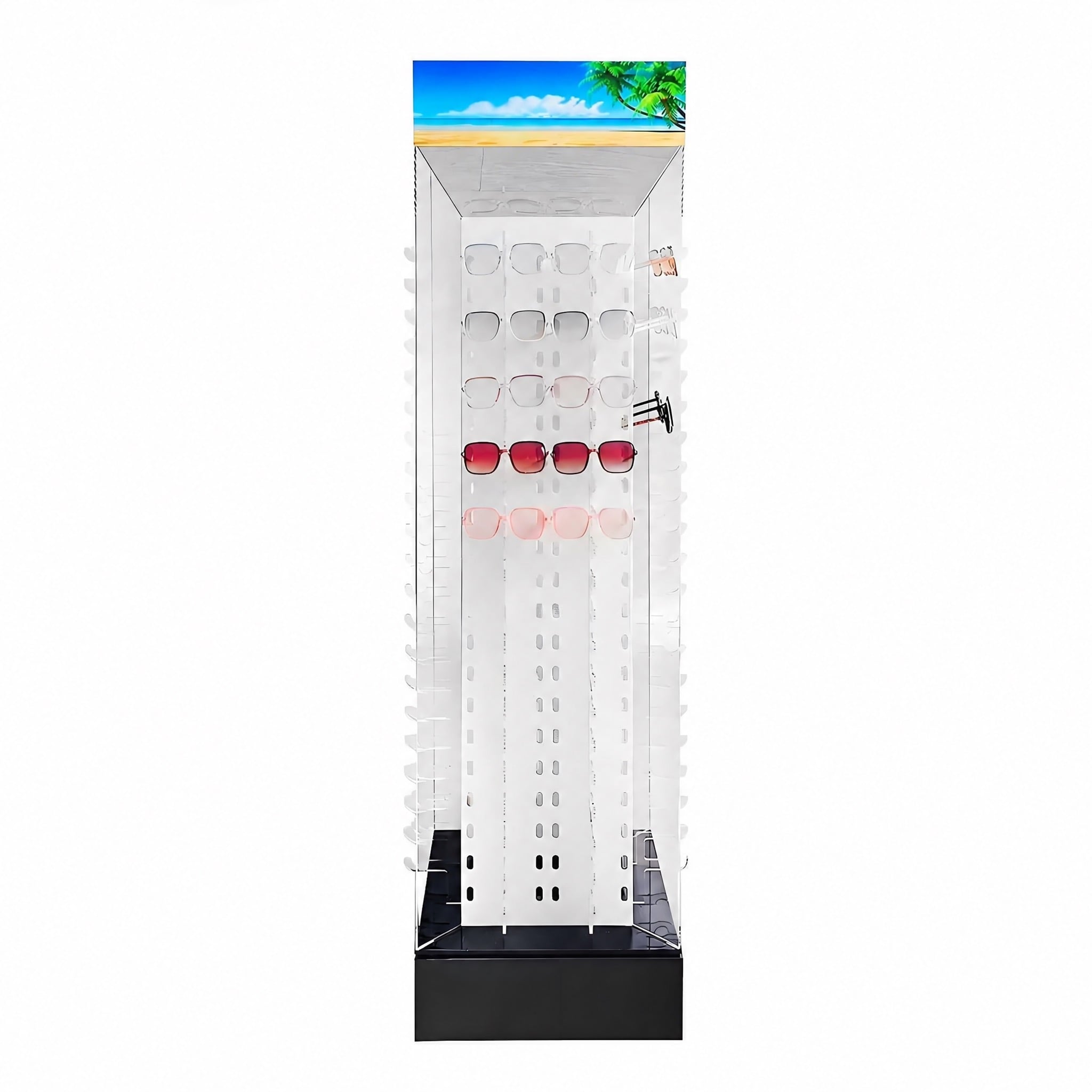
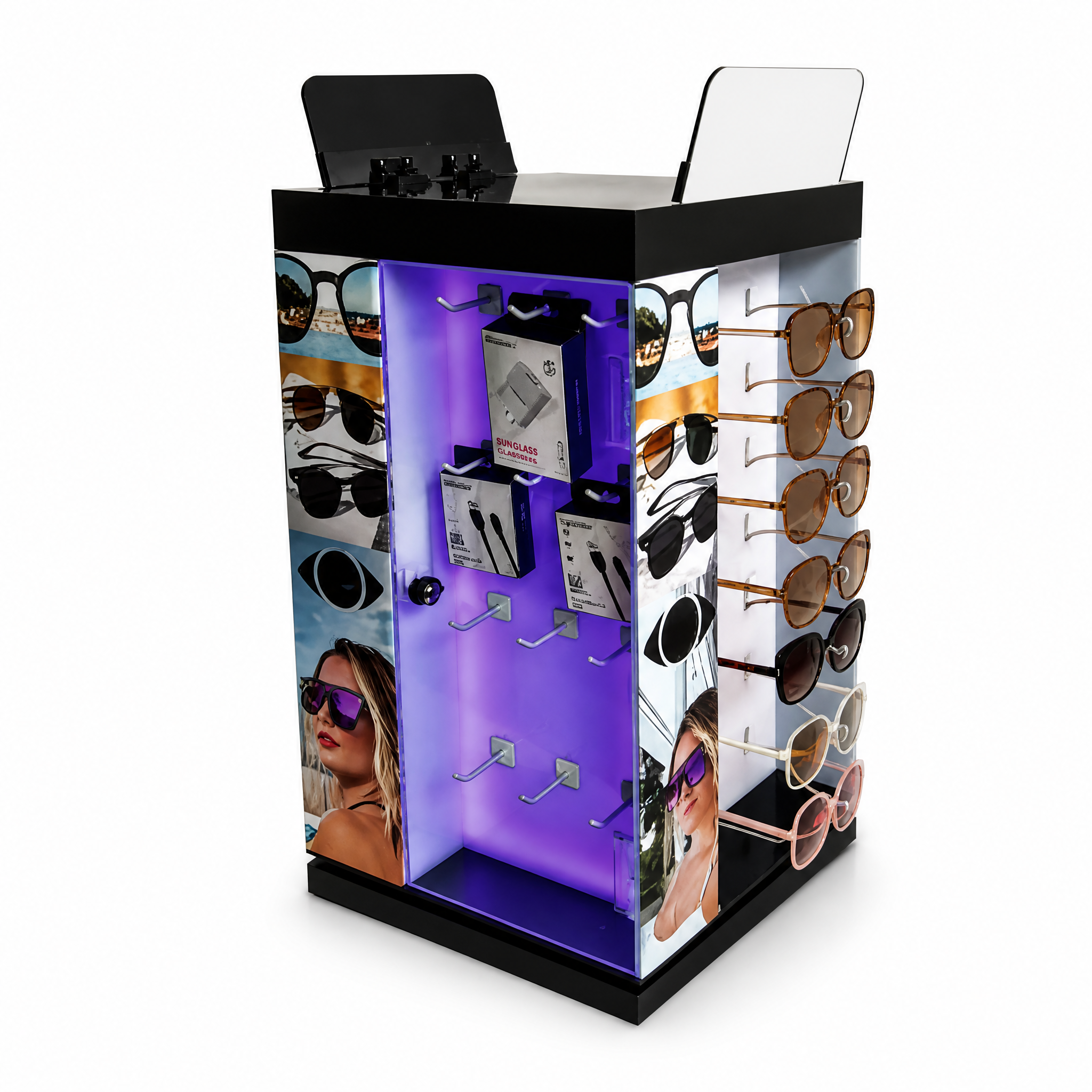
What Are Eyewear Display Racks?
Eyewear display racks are purpose-built fixtures designed to hold, organize, and present optical frames — including prescription glasses, sunglasses, and sports eyewear — in retail environments. As a procurement specialist sourcing display materials across multiple optical retail accounts, I've seen how the right eyewear display rack can elevate both frame visibility and store brand consistency at the same time. Whether configured as a countertop unit for an optical dispensary or a rotating floor-standing model for a sunglass boutique, eyewear display racks serve two roles simultaneously: keeping frames accessible and organized while reinforcing your brand's visual identity on the selling floor. That dual requirement — structural function and brand presentation — is what makes sourcing eyewear display racks a more deliberate decision than it might first appear.
Types of Eyewear Display Racks
Eyewear display racks come in several distinct configurations, each suited to a different store layout, frame volume, and retail context:
-
Countertop Eyewear Display Stands: Compact multi-compartment units for optical counters, dispensary desks, or retail checkout areas. Common materials include acrylic, solid wood, and metal — often combined in a single unit. Suitable for organizing frames by style, lens type, or price tier within a defined counter footprint.
-
Rotating Eyewear Display Racks: Floor-standing or countertop units with a rotating base, allowing customers to browse multiple faces of frames from one position. Particularly effective in boutique and department store eyewear sections where floor space is limited.
-
Wall-Mounted Frame Display Systems: Fixed panel systems using individual frame holders or rods to display eyewear along a store wall. Efficient for high-volume showroom environments or optical dispensaries where frame variety takes priority over a compact footprint.
-
Locking Security Display Racks: Eyewear display racks with lockable bars or controlled-access components to reduce frame displacement in higher-traffic retail settings. Common in sunglass kiosks and open-format retail sections.
-
LED Backlit Display Panels: Illuminated eyewear display panels that use integrated lighting to highlight premium or featured frame collections. A practical choice for flagship optical stores and luxury eyewear boutiques where visual elevation of specific SKUs is part of the store design brief.
Materials and Their Trade-offs
Eyewear display racks are available in acrylic, metal, solid wood, and composite combinations. Each material has a different performance profile, and the right choice depends on where and how long the display will be used.
Acrylic is the most commonly specified material for countertop eyewear display racks because of its optical clarity — frames present better when the display structure itself is visually clean and transparent. However, acrylic surfaces can become scratched or discolored after sustained retail use, particularly in high-traffic environments where frames are handled frequently. Buyers sourcing acrylic eyewear display racks for premium environments should assess surface treatment specifications carefully before committing to a bulk order. Bonding or joint areas are also easier to inspect under display lighting at close range, which means sample review under representative store conditions is worth including in the approval process.
Metal frames and bases offer structural rigidity that acrylic alone cannot match — particularly useful for rotating eyewear display rack mechanisms or floor-standing units supporting heavier frame collections over a longer deployment period. Solid wood adds tactile and visual warmth that some optical boutiques and luxury eyewear brands prefer as part of their in-store aesthetic. Combination structures — acrylic with metal hardware, or acrylic with a wood base — are frequently used where both visual clarity and structural durability are priorities.
An eyewear display rack that looks perfect in product photos may not hold up the same way under sustained retail conditions. That tension between visual appeal and functional durability is worth addressing early in the specification process — not after the bulk order has shipped.
How to Choose the Right Eyewear Display Rack
Most sourcing managers working through eyewear display rack procurement for the first time find that reviewing two or three samples side by side clarifies the specification faster than reviewing catalogs alone. Here is a practical step-by-step sequence that tends to reduce errors:
-
Define the retail environment: Is this eyewear display rack going into a small optical dispensary counter, a rotating kiosk configuration, or a wall-mounted showroom system? The environment determines what structural configuration makes sense and what material durability level is appropriate.
-
Set the frame capacity and organization logic: How many frames does the eyewear display rack need to hold? Will frames be organized by style, brand, or lens type? Compartment count, slot dimensions, and spacing all need to match your product range — not just approximate it.
-
Review material specifications against deployment duration: If the eyewear display rack will be in continuous retail use for more than one season, surface durability and material finish should be weighted more heavily than initial visual impact. If you are sourcing for a temporary promotion or seasonal kiosk, a lighter material configuration may be entirely appropriate.
-
Confirm branding and customization requirements: Most eyewear display racks in a B2B retail context require some form of brand customization — whether that is logo engraving, UV-printed branding, color-matched finishes, or silk-screen application. Confirming what customization options are available before finalizing the structural spec avoids revision cycles later.
-
Request samples and review under representative conditions: One frequently overlooked detail in eyewear display rack specification is that display height and frame visibility can read differently across regional retail environments. European and North American contexts can differ in average browsing height, fixture depth conventions, and store lighting standards. Always review samples under the actual store lighting and from the shopper's natural approach direction before committing to a production run.
In practice, the effectiveness of an eyewear display rack in a retail setting depends heavily on its position relative to the natural shopper path — a detail that is easy to miss when reviewing the display in isolation or from product photography. If your priority is brand visual impact, focusing on surface quality, lighting integration, and branding customization will serve you better than defaulting to the highest frame-capacity configuration.
Customization and Brand Integration
Eyewear display racks are almost never sourced without some degree of customization. The brand-facing nature of the product means that logo placement, color, material finish, and structural configuration need to align with the retailer's or brand's visual standards. Standard catalog items rarely meet all of these requirements without modification — and most B2B buyers in this category expect customization as part of the standard eyewear display rack order process, not as a premium add-on.
Common customization options for eyewear display racks include: compartment count and spacing configuration, acrylic panel dimensions and thickness, surface finish treatments (matte, glossy, frosted), logo application methods (engraving, UV printing, silk-screen), color and material finish specifications, and combination material options such as acrylic with metal hardware or acrylic with a wood base.
For buyers managing multi-location retail programs or international brand rollouts, consistency of color, finish, and structural dimensions across production batches is a key procurement requirement. A branded countertop eyewear display rack that varies in surface tone or compartment alignment between production runs creates a visible inconsistency at the point of sale — something that is difficult to resolve after delivery.
Common Applications
Eyewear display racks are used across a broad range of optical and retail environments:
-
Optical Dispensaries and Clinics: Multi-compartment countertop eyewear display racks and wall-mounted frame boards for organizing prescription frames by style, brand, or price tier.
-
Eyewear Boutiques and Specialty Stores: Custom rotating racks and branded countertop displays designed to reflect the store's aesthetic and support a curated frame selection.
-
Department Store Eyewear Sections: Modular eyewear display rack systems that integrate into a larger fixture layout, with consistent branding applied across multiple brand bays.
-
Sunglass Kiosks: Compact rotating floor-standing eyewear display racks designed for high-turnover, open-access retail environments where frame browsability and security are both considerations.
-
Optometry and Vision Care Centers: Functional eyewear display rack configurations that organize frames by prescription range, with display heights and compartment spacing suited for customer self-service.
Sourcing Considerations for International B2B Buyers
For European and North American buyers sourcing eyewear display racks from international manufacturers, several criteria tend to determine whether the first order proceeds smoothly. Documentation requirements, material compliance standards, packaging specifications for fragile acrylic components, and lead time planning all require more upfront communication than buyers accustomed to domestic sourcing typically expect.
Suppliers with experience serving European and North American retail programs — including familiarity with quality documentation requirements and export packaging standards for eyewear display rack products — are generally more efficient to work with for first orders. Both acrylic-focused and combination-material eyewear display racks have real merit in this category. The right choice depends on your deployment environment, customization requirements, and the level of production oversight you are able to manage across an international sourcing relationship.

 EN